
When you have coordination challenges, turn to Runsheng Transformer for help
It's all about making things easy, building partnerships, and providing a point of contact.
An oil immersed power transformer is a static electrical device that transfers energy between voltage levels while its core and windings stay completely submerged in insulating oil. The oil performs two jobs at once: it insulates live parts from the tank and from one another, and it carries heat away from the windings into the radiators, where that heat dissipates into the air. Because insulating oil has a far higher dielectric strength and thermal capacity than air, oil immersed units dominate medium and large capacity applications, typically from 30 kVA up to 6300 kVA and beyond, at voltage classes of 10 kV, 35 kV and higher. If you are equipping a factory, a substation, a mine, or a renewable energy project, this is the product category you will meet most often.
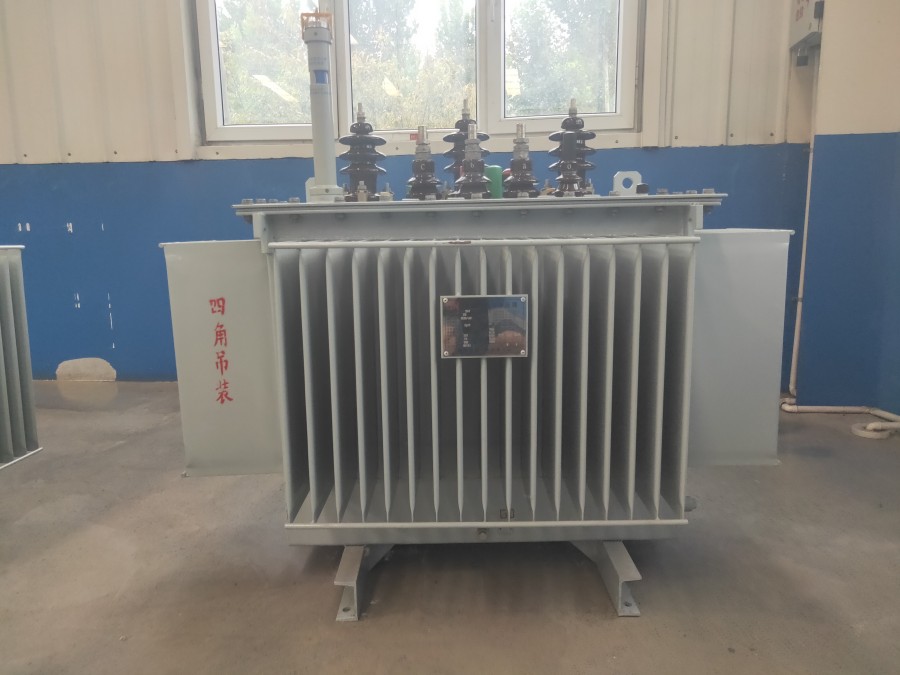
The letter-number code on the nameplate is the quickest way to judge a unit's energy performance. The number following the S indicates the loss level: S11 is the traditional low-loss grade, S13 and S20 reduce no-load and load loss further, and S22 represents the highest efficiency grade now specified in many public tenders and grid-connected projects. A higher grade costs more upfront but cuts no-load loss, which runs 24 hours a day for the whole 20 to 30 year service life. For buyers comparing quotations, the right comparison is not purchase price alone but total owning cost: the equipment price plus the capitalized cost of no-load and load losses over the expected operating life.
Related designs worth knowing include the S13 series 10 kV three-dimensional magnetic path wound core transformer, the D10 series single-phase wound core transformer, and the SH15 amorphous alloy transformer, whose amorphous core can cut no-load loss by roughly two thirds compared with conventional silicon steel units - a decisive advantage on sites that stay energised around the clock.
Oil immersed distribution transformers sit at the end of the grid, stepping 10 kV or 35 kV down to usable 400 V for commercial buildings, industrial plants, water treatment works, data centre yards and residential developments. On the generation side they are used in wind and solar farms as renewable energy transformers, and special versions serve mining transformers, rectifier transformers, lightning arrester transformers, capacity-regulating transformers and other custom-designed duties. Where fire safety rules forbid flammable liquid indoors, dry-type alternatives such as SCB13, SCB14 and SCB18 are the usual substitute, while SH15 and SCBH15 amorphous alloy units are chosen when no-load loss dominates the lifetime cost.
Oil immersed units are low-maintenance, but not maintenance-free. Check oil level and look for leaks each quarter, inspect the silica gel breather and replace it when it turns pink, and record top-oil and winding temperatures. Every one to two years, perform an oil dielectric strength test, a moisture test and dissolved gas analysis; trending these results detects overheating or partial discharge long before a failure occurs. Keeping the bushings clean and the tap changer in its verified position prevents most nuisance trips.
As a power transformer manufacturer, Runsheng Transformer Co., Ltd. produces S22, S20, S11 and S13 oil-immersed transformers, SCB13, SCB14 and SCB18 dry-type transformers, SH15 amorphous alloy transformers, and 35 kV and below preassembled substation equipment including European-style and American-style compact substations and high/low-voltage switchgear. Because units ship directly from the factory, buyers avoid distributor mark-ups and receive a full documentation package - manual, inspection report, test certificate and lifelong quality tracking - with every 30-6300 kVA unit.
An oil immersed power transformer is a long-life asset, and its real cost is the purchase price plus three decades of losses and maintenance. Define your capacity, voltage ratio, impedance, tapping range and efficiency grade first; request measured loss data rather than catalogue promises; and compare total owning cost rather than headline price. That approach keeps your project compliant, your operating cost predictable and your payback period short.
For specifications, drawings or a quotation on oil immersed power transformers and custom special transformers, contact: phone +86 13406394988, e-mail runsheng@7813transformer.com, WhatsApp 008613508930968.

Runsheng Transformer Co., Ltd. is a professional manufacturer of power transformers, specializing in oil-immersed transformers (S20, S11, S13), SH15 amorphous alloy transformers, S13 series 10KV 3D magnetic path wound-core transformers, D10 single-phase wound-core transformers, as well as mining transformers, rectifier transformers, surge arrestor transformers, load-tap-changing transformers, and custom-engineered special transformers.
WhatsApp & Wechat

No. 6, Intersection of Mount Huangshan Road and Changjiang Road, Liaocheng High tech Industrial Development Zone, Shandong, China


