
When you have coordination challenges, turn to Runsheng Transformer for help
It's all about making things easy, building partnerships, and providing a point of contact.
A 400kv power transformer is a high-voltage, high-capacity unit installed at the 400 kV level of a transmission network. Its job is straightforward but demanding: step generator output (commonly 15 kV to 27 kV) up to 400 kV for long-distance transmission, or step 400 kV down to 220 kV, 132 kV or 110 kV at bulk supply substations. Because a 400 kV line carries very large blocks of power, the transformer at each end is one of the most critical and most expensive assets in the system. Selecting it correctly is a capital decision, not a routine purchase.
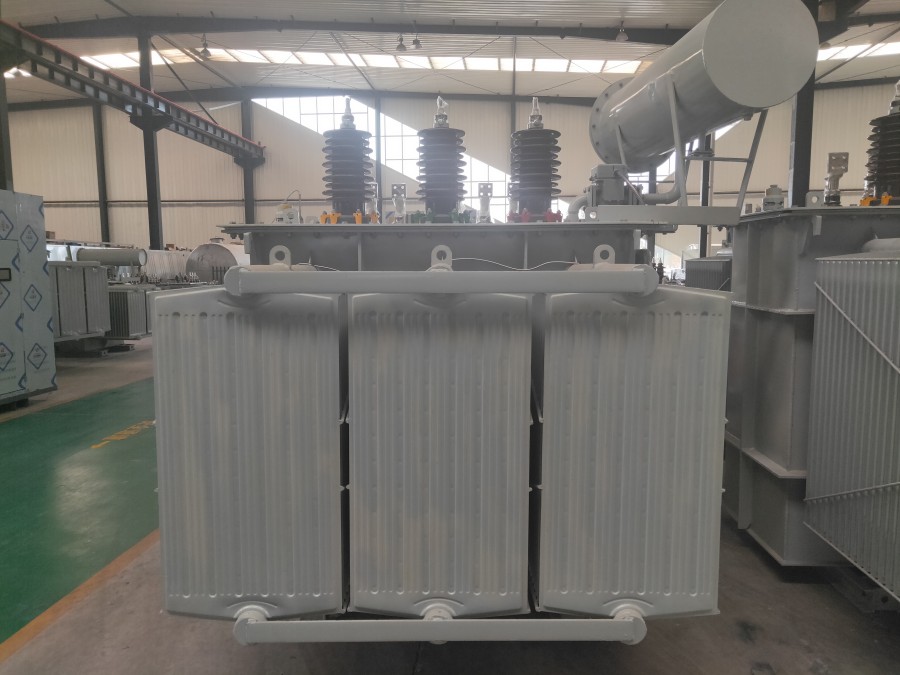
This overview is written for procurement teams, EPC contractors and plant engineers who need to understand what they are buying before they sign a purchase order.
You will find these units at generator step-up stations of large thermal, hydro and nuclear plants, at 400 kV substations feeding regional grids, at interconnections between transmission zones, and increasingly at the grid connection point of large renewable energy complexes. Offshore and remote renewable projects often rely on 400 kV export transformers to move bulk power to load centres with minimal losses.
Dry-type units such as the SCB10, SCB13, SCB14 and SCB18 families are excellent for indoor distribution, metro, commercial and industrial duty, but their insulation systems are normally limited to distribution voltage levels, typically up to 35 kV. At 400 kV, oil provides both dielectric strength and heat transfer that air simply cannot match in a practical footprint. This is why high-voltage transmission uses oil-immersed designs, while dry-type transformers cover the low-voltage side of the same substation.
Price is driven by MVA rating, impedance, loss specification, tap changer choice, bushing type, cooling class and transport complexity. The largest avoidable cost is over-specification. Writing an unnecessarily low loss requirement or an exotic impedance value can add significant material cost with little operating benefit.
Practical savings come from three places. First, align loss limits with the actual load profile instead of copying a specification from another project. Second, buy from a manufacturer rather than a trading layer, which removes intermediate margins and shortens the communication chain on drawings and inspections. Third, plan transport early, because late changes to shipping splits or site assembly are among the most expensive surprises in a 400 kV project.
For high-voltage equipment, verify the manufacturer's experience at the voltage class, review previous type test reports, and confirm that the factory can perform all specified routine and special tests in house. A supplier that provides a complete documentation set, defined warranty terms and traceable quality records will save far more over the asset life than a marginally lower first cost.
Runsheng Transformer Co., Ltd. is a China-based transformer manufacturer whose core strength lies in oil-immersed and dry-type distribution equipment, including S11, S13, S20 and S22 oil-immersed transformers, SCB10, SCB13, SCB14 and SCB18 dry-type transformers, SH15 and SCBH15 amorphous alloy transformers, mining and rectifier transformers, and 35 kV and below preassembled substations. Buyers sourcing transmission-class equipment often work with such manufacturers for the distribution and auxiliary transformers in the same project, where a single, well-documented supplier simplifies logistics and quality control.
What is the difference between a 400kv power transformer and a distribution transformer? The 400kv power transformer operates at transmission voltage and handles tens to hundreds of MVA, while distribution transformers typically work at 35 kV and below with much smaller ratings.
Can a 400kv power transformer be shipped oil-filled? It can, but many projects ship with nitrogen or reduced oil for weight and safety reasons, then fill and process oil at site.
How long should delivery take? Lead time depends on rating and test scope, and buyers should build inspection, transport and site commissioning into the schedule from the start.
Phone: +86 13406394988 | E-mail: runsheng@7813transformer.com | WhatsApp: 008613508930968

Runsheng Transformer Co., Ltd. is a professional manufacturer of power transformers, specializing in oil-immersed transformers (S20, S11, S13), SH15 amorphous alloy transformers, S13 series 10KV 3D magnetic path wound-core transformers, D10 single-phase wound-core transformers, as well as mining transformers, rectifier transformers, surge arrestor transformers, load-tap-changing transformers, and custom-engineered special transformers.
WhatsApp & Wechat

No. 6, Intersection of Mount Huangshan Road and Changjiang Road, Liaocheng High tech Industrial Development Zone, Shandong, China


