
When you have coordination challenges, turn to Runsheng Transformer for help
It's all about making things easy, building partnerships, and providing a point of contact.
A 500kv power transformer is a high-capacity power transformer designed to operate at a system voltage of 500 kV, the extra-high-voltage (EHV) level that forms the backbone of many national transmission grids. Unlike the distribution transformer mounted on a pole outside a factory, a 500kv power transformer can weigh several hundred tonnes, stand taller than a five-storey building, and carry a rating that commonly ranges from around 100 MVA to more than 1000 MVA per unit.
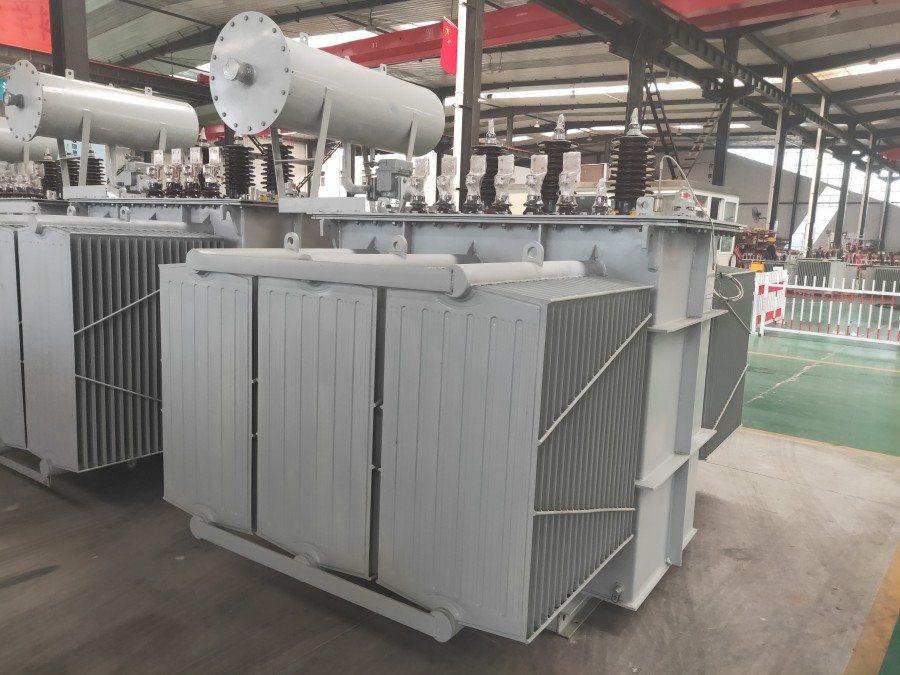
The working principle is the same as any transformer: two or more windings linked by a magnetic core transfer energy through electromagnetic induction. What changes at 500 kV is scale, insulation coordination and the precision required in manufacture. In simple terms, this is the machine that makes long-distance bulk power transmission economic — raising voltage lowers current, and lower current means smaller conductors and far lower resistive losses over hundreds of kilometres.
Most 500kv power transformers fall into a few recognisable families, and choosing the right one is the first cost decision a buyer makes.
An EHV transformer uses a laminated grain-oriented silicon steel core with step-lap joints to limit no-load loss and audible noise. Windings are usually disc or interleaved disc type, and larger units use continuously transposed conductors to control eddy and circulating losses. Insulation combines transformer oil with pressboard barriers, angle rings and oil ducts designed to withstand both power-frequency and impulse stresses. Cooling equipment, bushings, the tap changer and the tank are all engineered together, because a 500kv power transformer must also survive transport, seismic events and decades of thermal cycling.
Procurement should always be anchored to recognised standards: the IEC 60076 series for power transformers, GB 1094 for the Chinese market, IEEE C57.12.00 and C57.12.10 where applicable, plus dedicated standards for bushings (IEC 60137), tap changers (IEC 60214-1) and dissolved gas analysis (IEC 60599).
Ask for the full test report package, not just a summary certificate. A complete package with type test evidence is the single most reliable indicator that a supplier understands EHV work.
Commissioning on site includes oil processing and vacuum filling, bushing installation, protection and interlock checks, and a full set of pre-energisation tests. Once in service, condition monitoring pays for itself: dissolved gas analysis, bushing power-factor and capacitance monitoring, online partial discharge detection, fibre-optic winding temperature sensors and regular tap changer inspection all provide early warning of developing faults.
Not every project requires a 500kv power transformer, and over-specifying is one of the most common causes of wasted budget. For distribution and industrial duty at 35 kV and below, Runsheng Transformer Co., Ltd. manufactures S22, S20, S11 and S13 oil-immersed transformers, SCB13, SCB14 and SCB18 dry-type transformers, SH15 amorphous alloy transformers, mining and rectifier transformers, plus European-style and American-style compact substations and high/low-voltage switchgear in the 30–6300 kVA range. Units ship with manuals, inspection reports and test certificates, backed by lifelong quality tracking.
Whether you are specifying an EHV transmission interface or sourcing reliable distribution transformers at factory-direct prices, choosing a manufacturer with transparent testing, complete documentation and genuine after-sales support is the safest route to a project that performs for decades. Contact us at phone: +86 13406394988, e-mail: runsheng@7813transformer.com, or WhatsApp: 008613508930968 for specifications and quotations.

Runsheng Transformer Co., Ltd. is a professional manufacturer of power transformers, specializing in oil-immersed transformers (S20, S11, S13), SH15 amorphous alloy transformers, S13 series 10KV 3D magnetic path wound-core transformers, D10 single-phase wound-core transformers, as well as mining transformers, rectifier transformers, surge arrestor transformers, load-tap-changing transformers, and custom-engineered special transformers.
WhatsApp & Wechat

No. 6, Intersection of Mount Huangshan Road and Changjiang Road, Liaocheng High tech Industrial Development Zone, Shandong, China


