
When you have coordination challenges, turn to Runsheng Transformer for help
It's all about making things easy, building partnerships, and providing a point of contact.
If you are sourcing a 220kv power transformer for a grid substation, a wind or solar project, or a heavy industrial load, the difference between a good purchase and an expensive mistake usually comes down to three things: verified test data, honest loss guarantees, and a supplier that actually stands behind the delivery. This overview explains what a 220kv power transformer is, how it is built, which parameters matter during procurement, and how buying factory-direct can remove a large slice of the final price.
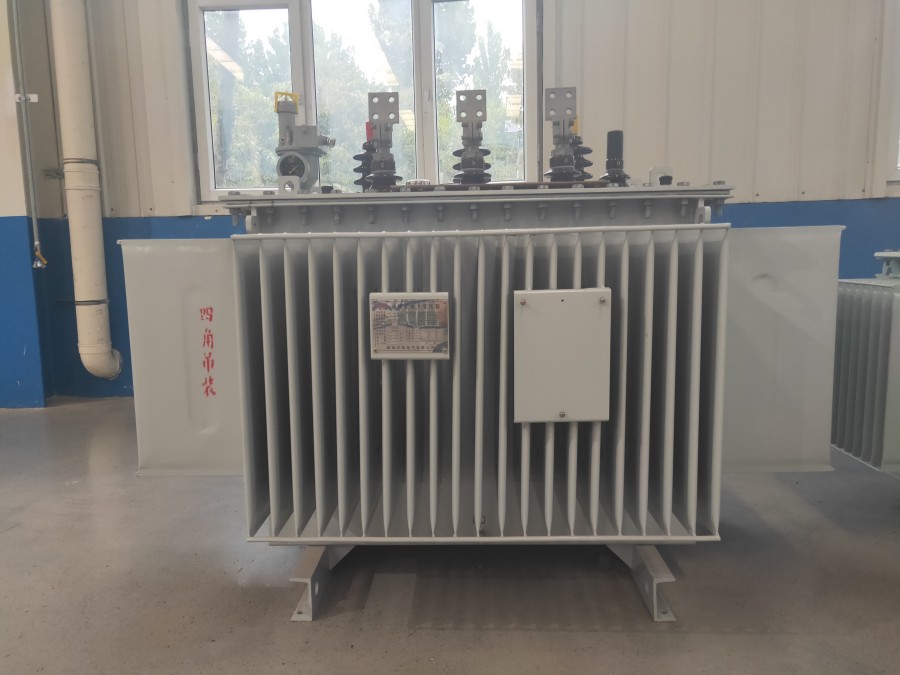
A 220kv power transformer is a large high-voltage power transformer operating at the 220 kV transmission tier. It steps voltage up from generator level (10 kV to 20 kV) or down to 110 kV, 66 kV, 35 kV or 10 kV for sub-transmission and distribution. Three-phase ratings commonly run from 31.5 MVA to 240 MVA, with 40 MVA, 63 MVA, 90 MVA, 120 MVA, 150 MVA and 180 MVA being the workhorse sizes in substation projects worldwide.
Unlike distribution-class units, machines at this level are almost always oil-immersed and oil-cooled, and most are fitted with on-load tap changing equipment, because they must regulate voltage continuously while carrying hundreds of amperes at each terminal. They are engineered, tested and shipped as substation-scale assets, not as catalogue items.
Ask for these figures in writing on the data sheet, not in a sales email. Guaranteed losses with penalty clauses are the single best protection a buyer has.
A 220kv power transformer is built around a core of high-grade grain-oriented silicon steel with mitered, step-lap joints to hold no-load loss down. Windings use copper conductors, often continuously transposed, insulated in oil-paper dielectric systems and vacuum dried before oil impregnation. Around the active part you will find the oil conservator, Buchholz relay, silica gel breather, radiators or forced-oil coolers, an on-load tap changer normally on the high-voltage neutral, condenser bushings of OIP or RIP construction, surge arresters, and a marshalling or control cabinet for monitoring and protection signals.
Dry-type transformers such as the SCB10, SCB13, SCB14 and SCB18 series are excellent for indoor distribution duty but are generally applied at 35 kV and below. At 220 kV, oil-immersed construction remains the standard because oil provides both insulation and heat transfer at a cost and size that dry-type designs cannot match.
Five factors dominate the quotation: the MVA rating, the copper content of the windings, the grade of grain-oriented silicon steel, the specified loss level, and the brand of tap changer and bushings. A lower-loss design uses more active material, so it costs more up front and less over thirty years of operation. Freight, duties and site services add a further layer. Buying directly from the manufacturer rather than through a trading chain typically removes a significant mark-up, and it also means spare parts, drawings and technical support come from the people who built the unit.
Runsheng Transformer Co., Ltd. is a power transformer manufacturer in China specialising in oil-immersed and dry-type transformers from 30 kVA to 6300 kVA at 35 kV and below, including S11, S13, S20 and S22 oil-immersed units, SCB10, SCB13, SCB14 and SCB18 dry-type units, SH15 and SCBH15 amorphous alloy transformers, mining, rectifier and capacity-regulating transformers, plus preassembled compact substations and high and low voltage switchgear. On a 220 kV project, these units normally serve as station service transformers, earthing transformers and auxiliary distribution equipment alongside the main 220kv power transformer. Every unit ships with manuals, inspection reports and test certificates, with lifelong quality tracking. For any 220 kV main transformer, always verify that the supplier holds valid type test reports at that voltage class.
Need a quotation, a data sheet or technical advice on matching transformers to a substation layout? Contact Runsheng Transformer Co., Ltd. by phone at +86 13406394988, by email at runsheng@7813transformer.com, or on WhatsApp at 008613508930968.

Runsheng Transformer Co., Ltd. is a professional manufacturer of power transformers, specializing in oil-immersed transformers (S20, S11, S13), SH15 amorphous alloy transformers, S13 series 10KV 3D magnetic path wound-core transformers, D10 single-phase wound-core transformers, as well as mining transformers, rectifier transformers, surge arrestor transformers, load-tap-changing transformers, and custom-engineered special transformers.
WhatsApp & Wechat

No. 6, Intersection of Mount Huangshan Road and Changjiang Road, Liaocheng High tech Industrial Development Zone, Shandong, China


