
When you have coordination challenges, turn to Runsheng Transformer for help
It's all about making things easy, building partnerships, and providing a point of contact.
A dry type transformer is a voltage conversion device that uses air and solid insulation instead of insulating oil. Its core and windings are cooled by natural or forced air, while the windings are protected by cast epoxy resin, resin-impregnated fiberglass or high-strength insulating materials. Because there is no oil tank, no oil conservator and no liquid that can leak, a dry type transformer is the preferred solution for indoor substations, basements, high-rise buildings, tunnels and any site where fire safety and maintenance cost really matter.
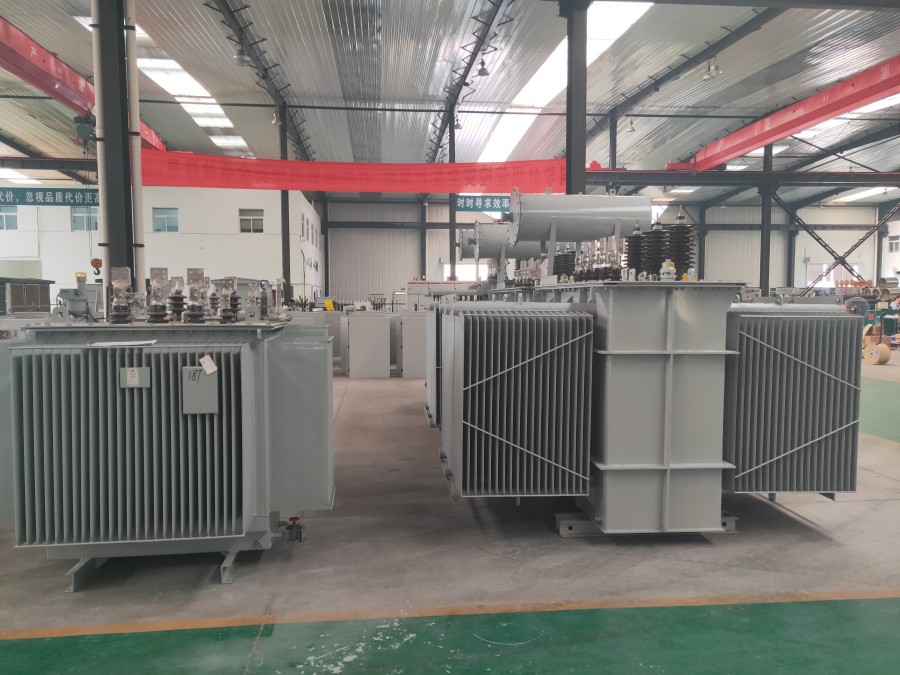
Put simply: if you see a transformer running quietly inside a building - in a hospital, a subway station, a data center or a shopping mall - it is very likely a dry type transformer.
The basic principle is the same as any other transformer: alternating current in the primary winding creates an alternating magnetic flux in the iron core, and that flux induces a voltage in the secondary winding. What makes the dry type transformer different is how heat and insulation are managed.
Model codes are not random letters - they tell you the phase, the insulation structure and the loss level of the unit you are buying.
Choosing between them is mostly a calculation: higher efficiency classes cost a little more up front but pay the difference back through lower losses over years of operation.
An accurate specification sheet prevents expensive rework after delivery. Check at least the following:
Price differences between quotations for the same capacity often come from hidden gaps: thinner conductor, lower-grade silicon steel, a lower efficiency class, or missing type tests. A reliable way to control both cost and risk is to buy directly from the manufacturer and compare technical data sheet by data sheet, not price by price alone. As a transformer manufacturer with a comprehensive inventory, Runsheng Transformer Co., Ltd. supplies SCB10, SCB13, SCB14 and SCB18 dry type transformers alongside S11, S13, S20 and S22 oil-immersed transformers, SH15 and SCBH15 amorphous alloy units, and 35 kV preassembled substations. Every unit is delivered with manuals, inspection reports, test certificates and lifelong quality tracking.
Before placing an order, use this short checklist:
A dry type transformer is a long-life asset, not a one-off purchase. Understanding its structure, series naming and key parameters lets you specify correctly the first time, avoid overspending on unnecessary options, and secure a unit that runs efficiently for decades. Whether you need a standard SCB series distribution unit or a custom special transformer for an unusual load, working directly with the source factory keeps quality, documentation and price fully transparent.
Contact us for a quotation or technical consultation: phone +86 13406394988, e-mail runsheng@7813transformer.com, WhatsApp 008613508930968.

Runsheng Transformer Co., Ltd. is a professional manufacturer of power transformers, specializing in oil-immersed transformers (S20, S11, S13), SH15 amorphous alloy transformers, S13 series 10KV 3D magnetic path wound-core transformers, D10 single-phase wound-core transformers, as well as mining transformers, rectifier transformers, surge arrestor transformers, load-tap-changing transformers, and custom-engineered special transformers.
WhatsApp & Wechat

No. 6, Intersection of Mount Huangshan Road and Changjiang Road, Liaocheng High tech Industrial Development Zone, Shandong, China


