
When you have coordination challenges, turn to Runsheng Transformer for help
It's all about making things easy, building partnerships, and providing a point of contact.
Cooling class is one of the most consequential and most frequently misunderstood decisions in transformer procurement. An ONAF transformer sits at the practical center of that decision: it uses the simplest, most proven oil-immersed architecture available, then adds forced-air cooling to extract significantly more capacity from the same core-and-coil assembly. For buyers specifying distribution and power transformers from 30 kVA up to several MVA, understanding what ONAF means, how the fans are staged and controlled, and which parameters actually drive price is the difference between an oversized purchase and a right-sized one. This overview explains the fundamentals from a procurement perspective.
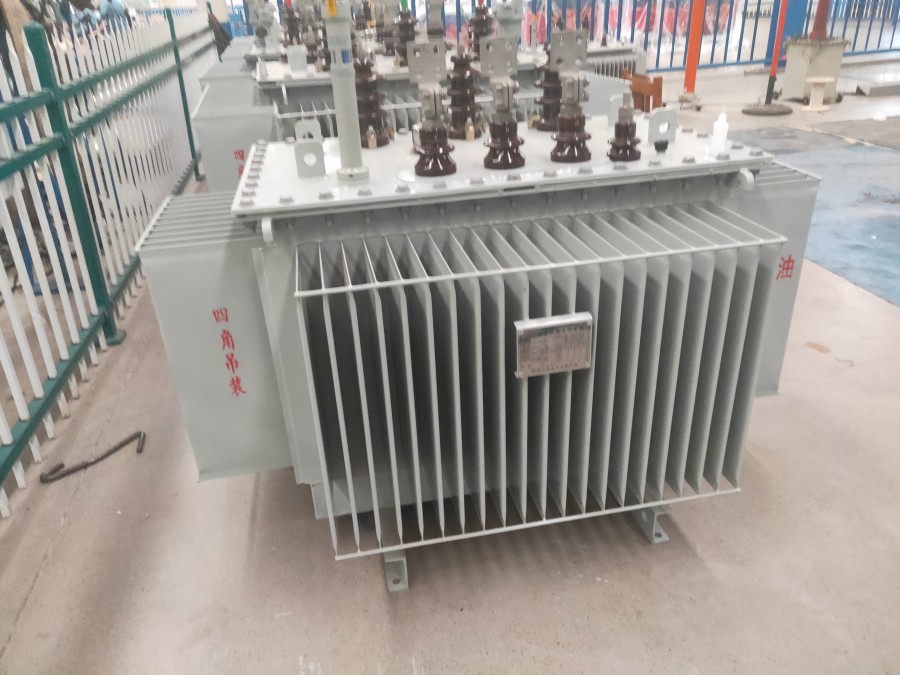
ONAF is the standard IEC cooling designation that stands for Oil Natural, Air Forced. Each letter describes one link in the heat-removal chain: the oil moves through the tank and radiators by natural convection, while air movement across the radiator surfaces is provided by motor-driven fans. Nothing about the internal oil circuit is pumped, which keeps the design mechanically simple and highly reliable.
Because cooling class directly determines how much loss a unit can safely dissipate, it is written into the rating. The four classes buyers most often compare are:
Many ONAF transformer units are dual-rated and carry a nameplate reading such as ONAN/ONAF 20/25 MVA — 20 MVA with fans off, 25 MVA with fans running. That dual rating is the single most useful commercial feature of the design.
Heat generated in the core and windings is transferred to the insulating oil. The warmed oil becomes less dense, rises through the tank and flows into the radiator bank, where it gives up heat to the surrounding air before returning to the bottom of the tank. Fans mounted on the radiators push ambient air through the fins, and this forced airflow can multiply the convection heat-transfer coefficient several times over compared with natural cooling alone.
Control is straightforward but worth verifying during inspection:
Because the fans only run when oil temperature demands it, an ONAF transformer operates as a quiet, low-loss ONAN unit at light load and only becomes an ONAF unit during peaks — an efficiency profile that matters on renewable energy and cyclic industrial duty.
The trade-offs are equally clear: fan noise adds roughly 3 to 6 dB(A) when running, the control cabinet and auxiliary wiring need maintenance, and radiator fins must be kept clean for the rating to hold. In dusty or coastal sites, that maintenance discipline is essential.
ONAF cooling is the mainstream choice for oil-immersed distribution and power transformers in the 30 to 6300 kVA range and beyond, particularly for industrial plants with cyclic loads, mining and mineral processing sites, renewable energy collector substations, rectifier duty, mobile and compact substations, and urban distribution substations where footprint is limited but peak demand is not.
Two identical-looking quotations can differ by a wide margin purely on loss figures, corrosion class and fan control scope. Always compare on those three lines before comparing headline price.
Reputable ONAF transformer manufacturers build and test to IEC 60076, GB 1094 or IEEE C57.12.00 depending on destination market. Routine tests should include winding resistance, ratio, impedance and load loss, no-load loss and current, applied voltage, induced voltage and oil dielectric tests. For higher ratings, request the temperature-rise type test report, lightning impulse report and short-circuit withstand evidence. A complete delivery package should include the routine test certificate, oil test report, nameplate drawing, cooling control schematic and an operation and maintenance manual.
Much of the avoidable cost in transformer procurement comes from over-specification: buying an ONAN unit large enough for a peak that occurs a few hours a year, instead of a dual-rated ONAF transformer sized to the same peak. The second error is buying on headline price and discovering later that loss figures, fan control scope or corrosion protection were cut to reach it.
Working with a manufacturer that holds stock and builds to national standards shortens both the specification cycle and the lead time. Runsheng Transformer Co., Ltd. produces S11, S13, S20 and S22 oil-immersed transformers, SCB10, SCB13, SCB14 and SCB18 dry-type transformers, SH15 and SCBH15 amorphous alloy transformers, plus mining, rectifier and other custom special transformers, alongside 35 kV and below preassembled compact substations and high and low voltage switchgear. Units are delivered factory-direct with manuals, inspection reports, test certificates and lifelong quality tracking, so the documentation needed for acceptance testing arrives with the equipment rather than weeks later.
Get these five items right and the ONAF transformer you receive will deliver its rated capacity quietly for decades, with maintenance limited to fans, thermostats and clean radiator fins.
Contact Runsheng Transformer Co., Ltd. for factory-direct pricing and technical selection support: phone +86 13406394988, e-mail runsheng@7813transformer.com, WhatsApp 008613508930968.

Runsheng Transformer Co., Ltd. is a professional manufacturer of power transformers, specializing in oil-immersed transformers (S20, S11, S13), SH15 amorphous alloy transformers, S13 series 10KV 3D magnetic path wound-core transformers, D10 single-phase wound-core transformers, as well as mining transformers, rectifier transformers, surge arrestor transformers, load-tap-changing transformers, and custom-engineered special transformers.
WhatsApp & Wechat

No. 6, Intersection of Mount Huangshan Road and Changjiang Road, Liaocheng High tech Industrial Development Zone, Shandong, China


