
When you have coordination challenges, turn to Runsheng Transformer for help
It's all about making things easy, building partnerships, and providing a point of contact.
ONAF stands for Oil Natural Air Forced, and an ONAF transformer is simply an oil-immersed transformer whose cooling system has been upgraded with motor-driven fans. The two letters that matter most in daily operation are the last two: the oil circulates by natural convection (thermal siphon effect), while air is pushed across the radiator surfaces by fans rather than relying on ambient air alone. That single addition of forced airflow is what allows the same core-and-coil assembly to carry significantly more load than its natural-cooling counterpart.
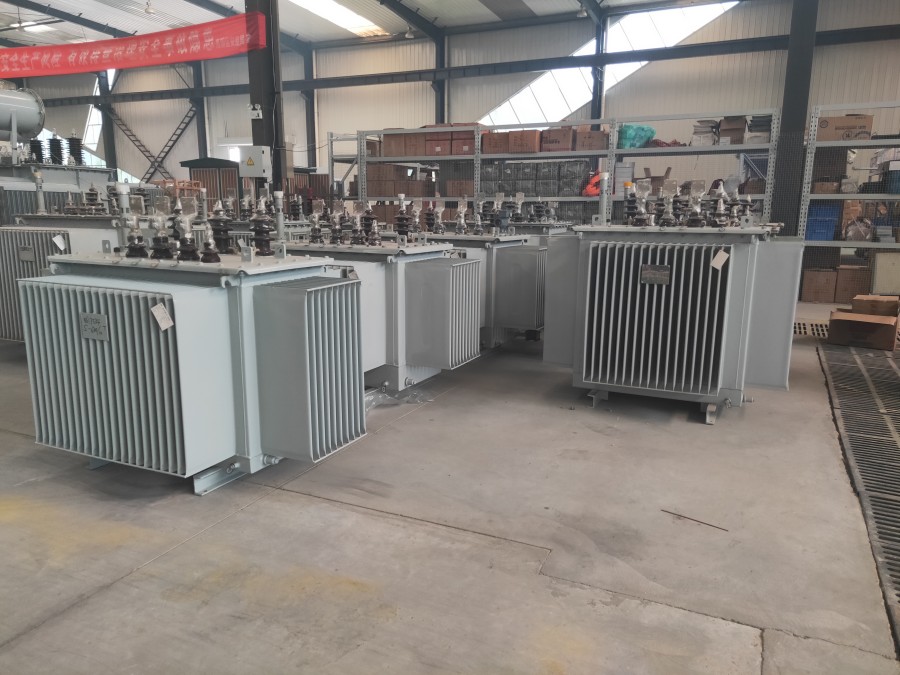
For anyone specifying or purchasing distribution and power transformers, understanding ONAF cooling is not academic detail — it directly affects how much capacity you pay for, how the unit behaves on peak load, and what your maintenance obligations look like over a 25–30 year service life.
The cooling process in an ONAF transformer follows a continuous thermal loop:
Because fan starting is temperature-driven, an ONAF transformer runs quietly and efficiently at light load, then automatically brings additional cooling online as demand rises.
Cooling class designations are frequently confused during tender preparation. A quick comparison:
In practice, the choice comes down to load profile and space. If peak demand occurs only a few hours per day, an ONAF transformer with a dual ONAN/ONAF rating usually delivers the best cost per kVA. If the unit will run near nameplate for long continuous periods, either a larger ONAN unit or an OFAF design may be the more robust choice.
The trade-offs are equally clear: fans consume auxiliary power (typically a small fraction of rated output), require periodic inspection of motors, bearings and blade condition, and add a little to sound pressure levels. These are routine items rather than obstacles, but they belong in the total cost of ownership calculation.
A precise specification prevents both over-buying and under-buying. Confirm at minimum:
Routine factory tests for an ONAF transformer generally include winding resistance, turns ratio, impedance and load loss, no-load loss and current, insulation resistance, power-frequency withstand, oil dielectric strength, and a temperature rise type test where required by the contract. Reputable manufacturers supply these reports with the unit, together with outline drawings, nameplate data and a maintenance schedule so that commissioning and future condition assessment are straightforward.
Runsheng Transformer Co., Ltd. manufactures oil-immersed transformers, dry-type transformers and amorphous alloy transformers, including S11, S13, S20 and S22 series units, together with 35 kV and below preassembled substation equipment. Products are built to national standards and shipped with manuals, inspection reports, test certificates and lifelong quality tracking — a practical advantage when ONAF cooling stages, loss values or special site conditions need to be tailored rather than picked from a catalogue.
Whether you need a single 630 kVA distribution unit or a batch of custom special transformers, confirming the cooling class and ratings early is the cheapest decision you will make on the project.
Contact for specifications and factory-direct quotes: phone +86 13406394988, e-mail runsheng@7813transformer.com, WhatsApp 008613508930968.

Runsheng Transformer Co., Ltd. is a professional manufacturer of power transformers, specializing in oil-immersed transformers (S20, S11, S13), SH15 amorphous alloy transformers, S13 series 10KV 3D magnetic path wound-core transformers, D10 single-phase wound-core transformers, as well as mining transformers, rectifier transformers, surge arrestor transformers, load-tap-changing transformers, and custom-engineered special transformers.
WhatsApp & Wechat

No. 6, Intersection of Mount Huangshan Road and Changjiang Road, Liaocheng High tech Industrial Development Zone, Shandong, China


