
When you have coordination challenges, turn to Runsheng Transformer for help
It's all about making things easy, building partnerships, and providing a point of contact.
An OFAF transformer is an oil-immersed transformer whose cooling system uses Oil Forced, Air Forced circulation, a cooling class defined in IEC 60076-2. Two things happen at the same time: electric oil pumps push the hot insulating oil from the tank through the radiator bank, and fans blow ambient air across the radiator fins. Because both the internal oil flow and the external air flow are mechanically assisted, an OFAF transformer can dissipate far more heat than a naturally cooled unit of the same tank and radiator size.
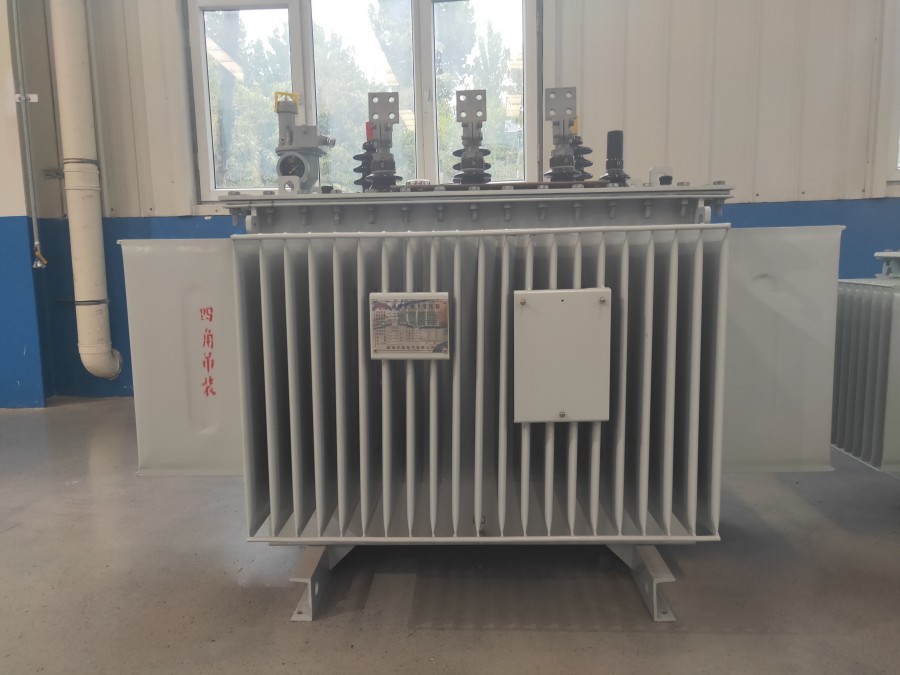
The four-letter code is worth understanding, because it explains why two transformers with identical cores can carry very different nameplate ratings. The first pair of letters describes the oil circulation (ON = natural, OF = forced). The second pair describes how the external cooling medium moves (AN = natural air, AF = forced air, WF = forced water). This is why ONAN, ONAF, OFAF and OFWF transformers are really four cooling stages of the same oil-immersed design family rather than four unrelated products.
In a typical OFAF transformer, heat generated by the windings and core is transferred to the insulating oil, which is then moved along a defined path by pumps and returned through radiators or coolers before re-entering the tank. Operation is usually staged: a base stage with pumps and fans running, and additional stages that switch in extra pumps or fan groups as oil and winding temperatures rise or as load increases.
Because the cooling is staged, an OFAF transformer is often specified with two or three ratings on the same nameplate, for example an ONAN rating for light load and a higher OFAF rating for peak load. This flexibility is one of the main reasons designers choose this cooling class.
In practical procurement terms, moving from ONAF to OFAF typically allows a meaningful uprating of the same core and tank, often in the range of 20% to 30% depending on the design, ambient conditions and permitted temperature rise. The trade-off is auxiliary power consumption, added moving parts, more control logic and a slightly higher noise level from pumps and fans.
OFAF cooling is chosen when load density is high, space is limited, or ambient temperatures are severe. Typical applications include:
An OFAF transformer is only as good as its specification. Before requesting quotations, confirm the following with your supplier:
Most problems with OFAF transformer purchases come from specification gaps rather than manufacturing defects. Oversizing is the classic error: buyers sometimes pay for an unnecessary OFAF rating when a well-selected ONAF unit would run comfortably at the actual load profile. Conversely, undersizing the radiator bank or ignoring site ambient temperature forces pumps and fans to run continuously, which increases auxiliary power consumption, noise and maintenance.
Other frequent issues include comparing quotations on price only while ignoring loss evaluation, accepting vague cooling-stage descriptions, and failing to confirm that pump and fan motors are rated for the site voltage and that spare parts are available. A supplier that provides complete test data, clear cooling-stage definitions and lifelong quality tracking removes most of this risk. Manufacturers such as Runsheng Transformer Co., Ltd. supply OFAF and ONAF oil-immersed units alongside the S11, S13, S20 and S22 series and SCB10, SCB13, SCB14 and SCB18 dry-type transformers, which makes it easier to compare cooling options on a like-for-like basis within one technical proposal.
OFAF transformers are engineered products, not catalog items. Buying directly from the manufacturer keeps the cooling-stage design, loss evaluation, tap changer choice and protection scheme in one technical conversation, avoids reseller mark-ups, and gives faster access to test reports and spare parts. For overseas projects, factory-direct supply also simplifies documentation for customs, installation and acceptance testing.
If you are comparing OFAF transformer options for a substation, industrial plant or renewable energy project, it is worth requesting a technical proposal that shows both ONAF and OFAF ratings for the same core, together with losses, dimensions and auxiliary load. That single comparison usually reveals which cooling class delivers the lowest total cost of ownership for your load profile.
Contact us for a quotation or technical discussion: phone +86 13406394988, e-mail runsheng@7813transformer.com, WhatsApp 008613508930968.

Runsheng Transformer Co., Ltd. is a professional manufacturer of power transformers, specializing in oil-immersed transformers (S20, S11, S13), SH15 amorphous alloy transformers, S13 series 10KV 3D magnetic path wound-core transformers, D10 single-phase wound-core transformers, as well as mining transformers, rectifier transformers, surge arrestor transformers, load-tap-changing transformers, and custom-engineered special transformers.
WhatsApp & Wechat

No. 6, Intersection of Mount Huangshan Road and Changjiang Road, Liaocheng High tech Industrial Development Zone, Shandong, China


