
When you have coordination challenges, turn to Runsheng Transformer for help
It's all about making things easy, building partnerships, and providing a point of contact.
An air cooled transformer is a transformer whose heat is removed by air rather than by a dedicated liquid cooling circuit or forced water loop. In practice the term covers two large families that engineers meet every day on distribution networks, industrial plants and commercial buildings: dry-type transformers, where the windings are cooled directly by surrounding air, and oil-immersed transformers that rely on natural oil circulation plus radiator surfaces to move heat into the air. Both are, in the broadest sense, air cooled transformer designs — the cooling medium that finally absorbs the heat is ambient air.
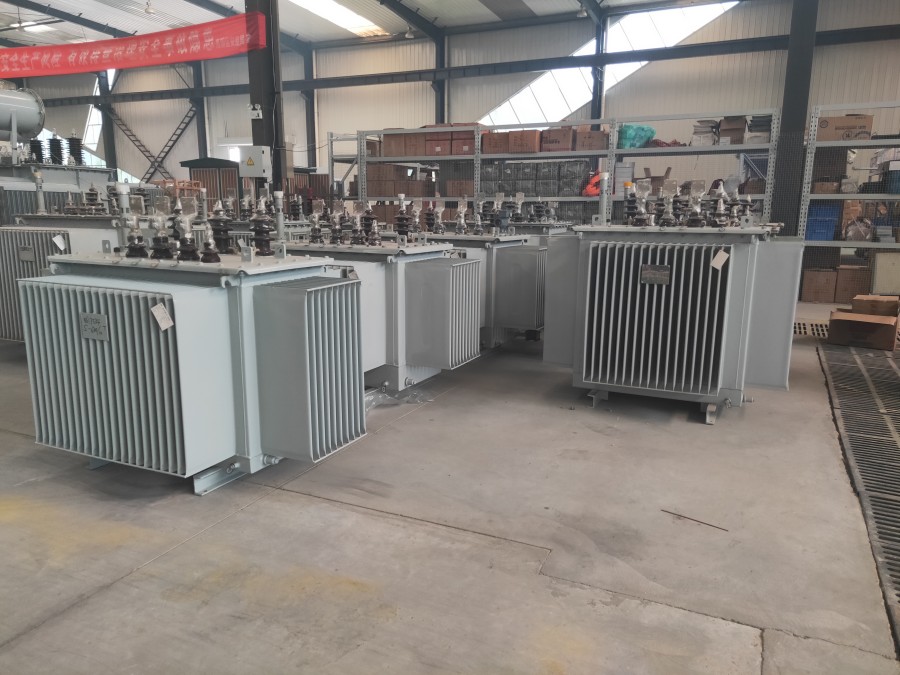
The distinction matters because it drives almost every purchasing decision: fire safety, installation space, maintenance routine, altitude and humidity limits, and of course price. Understanding the basics before you send an enquiry is the fastest way to avoid overpaying for capacity you do not need, or discovering too late that the unit you ordered cannot be installed where you planned.
Heat in a transformer comes from two sources: no-load loss in the magnetic core and load loss in the windings. Air cooling removes that heat through three common mechanisms, usually described by the standard four-letter cooling codes stamped on the nameplate.
Dry-type units are further classified by insulation system, usually Class F or Class H, with defined temperature-rise limits that keep the winding well below its thermal class under rated load. Oil-immersed units follow the conventional limits of 65 K average winding rise and 60 K top-oil rise under standard conditions. These numbers are not marketing decoration — they are the boundary between a transformer that lasts thirty years and one that ages prematurely.
Dry-type air cooled transformer. Cast-resin models such as SCB10, SCB13, SCB14 and SCB18 are the standard choice for indoor installation: substations inside buildings, hospitals, data centres, metro stations, shopping malls and production halls where oil leakage or fire load is unacceptable. They are self-extinguishing, need no oil sampling, and are easy to inspect. The trade-off is a higher purchase price at the same rating and a greater sensitivity to dust, humidity and poor ventilation — the enclosure must breathe.
Oil-immersed air cooled transformer. Models such as S11, S13, S20 and S22, together with amorphous alloy SH15 units, use oil for insulation and heat transfer and air to finally reject the heat through radiators or corrugated tank walls. They offer the best cost per kVA, excellent overload capability and strong performance outdoors or in standalone substations. S13 and S22 grades reduce no-load loss substantially compared with older S9 designs, which matters on networks that run energised around the clock.
For projects with strict loss evaluation or renewable energy integration, amorphous alloy cores and low-loss S20/S22 designs are usually worth the small price premium; on a 24-hour load profile the energy saving pays back the difference within a few years.
Whether you are buying a 30 kVA unit for a workshop or a 6300 kVA unit for a plant substation, the same specification sheet drives both performance and quotation. Insist that every item is stated explicitly rather than left to the supplier's discretion.
The most expensive errors are rarely technical mysteries. They are small omissions that surface after delivery.
Because the air cooled transformer is a mature, standards-driven product, the difference between suppliers lies in material honesty, process control and after-sales traceability rather than in novel technology. Buying directly from the manufacturing plant removes trading margins and, more importantly, puts you in contact with the people who wound the coils and ran the tests. That is why experienced procurement teams ask for the factory's test bench records and a lifelong quality tracking commitment before signing.
Runsheng Transformer Co., Ltd. manufactures S11, S13, S20 and S22 oil-immersed transformers, SCB10, SCB13, SCB14 and SCB18 dry-type transformers, SH15 amorphous alloy units, 35 kV and below preassembled substations, and custom special transformers for mining, rectifier and renewable energy applications. Units comply with national standards and ship with manuals, inspection reports and test certificates, supported by lifelong quality tracking.
If you are comparing offers, send your specification sheet — capacity, voltage ratio, vector group, cooling class and installation environment — and ask for a quotation that states conductor material, core grade and guaranteed losses line by line. That single habit is usually worth more than any discount.
Contact: phone +86 13406394988 | e-mail runsheng@7813transformer.com | WhatsApp 008613508930968

Runsheng Transformer Co., Ltd. is a professional manufacturer of power transformers, specializing in oil-immersed transformers (S20, S11, S13), SH15 amorphous alloy transformers, S13 series 10KV 3D magnetic path wound-core transformers, D10 single-phase wound-core transformers, as well as mining transformers, rectifier transformers, surge arrestor transformers, load-tap-changing transformers, and custom-engineered special transformers.
WhatsApp & Wechat

No. 6, Intersection of Mount Huangshan Road and Changjiang Road, Liaocheng High tech Industrial Development Zone, Shandong, China


