
When you have coordination challenges, turn to Runsheng Transformer for help
It's all about making things easy, building partnerships, and providing a point of contact.
An air cooled transformer is a transformer whose heat is transferred directly to the surrounding air instead of to a liquid coolant loop. In procurement language the term covers two families: dry-type transformers, where cast-resin or resin-impregnated windings are cooled by air moving through the enclosure, and oil-immersed transformers whose radiators release heat to ambient air in the classic ONAN (oil natural, air natural) mode. Both designs eliminate water cooling, cooling towers and the associated piping, which is why they dominate indoor substations, commercial buildings and distribution networks.
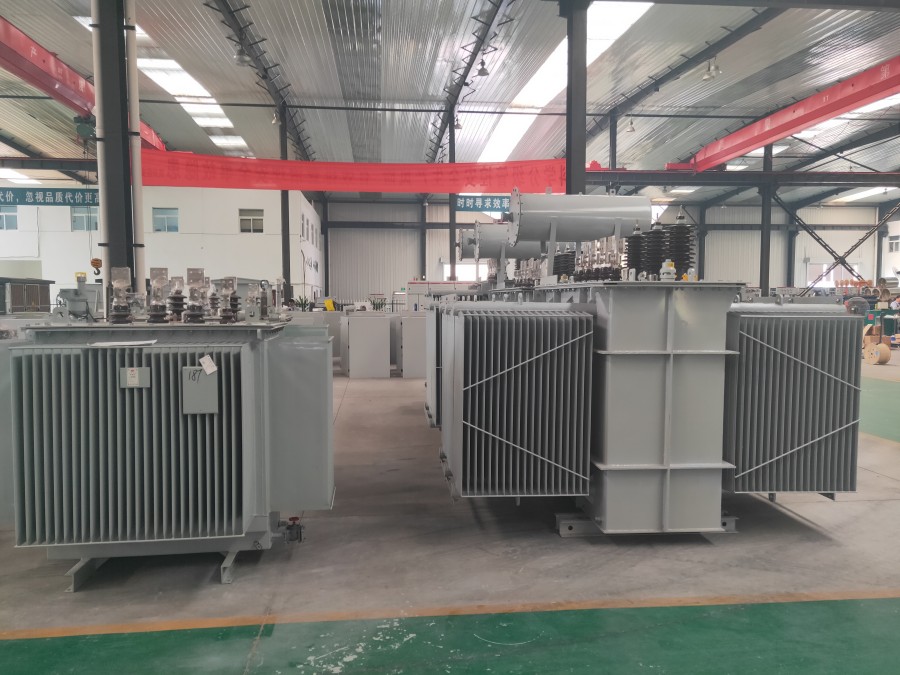
Air cooling is described by a two-letter code on the nameplate. AN means natural convection with no fans: silent, maintenance-free, and typically rated for the continuous base load. AF means forced air, where fans push air across winding ducts and can lift the usable output of the same frame by roughly 25 to 40 percent; the fans are normally switched by the winding temperature controller in stages. Many units are dual-rated (AN/AF), so you buy one transformer and get a defined overload margin without oversizing the core.
Because air is a weaker coolant than oil, air cooled designs rely on generous winding ducts, large radiating surfaces and high-temperature insulation systems, class F (155 degrees C) or class H (180 degrees C), to keep hot-spot temperatures within limits at rated load.
Two quotations with the same kVA rating can differ by 30 percent or more once you look past the headline. Insist on these parameters in writing:
Dry-type air cooled units are the default wherever oil is unwelcome: high-rise buildings, hospitals, shopping malls, metro and tunnel projects, data centers, water treatment plants and food processing lines. They are self-extinguishing, need no oil bunds or fire-rated vaults, and can sit close to the load, which shortens low-voltage cable runs. Oil-immersed air-cooled distribution transformers remain the workhorse for outdoor pole-mounted and pad-mounted service, industrial plants and renewable energy transformer applications where the extra thermal headroom and lower cost per kVA outweigh the footprint and fire-separation requirements.
Three factors drive the real price of an air cooled transformer: winding material (copper or aluminium), the loss tier you specify, and how many hands the unit passes through before it reaches you. Copper windings cost more up front but reduce load loss and run cooler; a higher efficiency tier raises the purchase price and cuts the electricity bill for the next twenty years. As a working discipline, always ask for a loss-capitalisation comparison rather than comparing only the quotation totals.
Buying from the manufacturer removes trading-company margins and, more importantly, gives you direct access to the test bench and the design engineer. Manufacturers such as Runsheng Transformer Co., Ltd. build SCB10, SCB13, SCB14 and SCB18 dry-type units and S11, S13, S20 and S22 oil-immersed units in the 30 to 6300 kVA range, shipping each unit with a manual, routine test report and lifelong quality tracking record — documents you should expect from any factory-direct supplier.
Air cooled transformers ask little, but they do ask for airflow. Keep the ventilation openings and winding ducts clear, vacuum dust from the winding surfaces on a scheduled basis, verify that fans start at the set temperature, and check insulation resistance with a megger at each annual shutdown. In dusty or coastal sites, shorten the cleaning interval and inspect terminal connections for corrosion.
Write down capacity, voltage ratio, cooling class, loss tier, impedance, IP rating, ambient conditions and any certification requirement, then send the same sheet to every supplier. A factory that answers with specific figures, drawings and test standards is telling you something about how it will handle the order. For technical selection or a factory-direct quotation on air cooled and oil-immersed transformers, contact Runsheng Transformer Co., Ltd. at +86 13406394988, runsheng@7813transformer.com or WhatsApp 008613508930968.

Runsheng Transformer Co., Ltd. is a professional manufacturer of power transformers, specializing in oil-immersed transformers (S20, S11, S13), SH15 amorphous alloy transformers, S13 series 10KV 3D magnetic path wound-core transformers, D10 single-phase wound-core transformers, as well as mining transformers, rectifier transformers, surge arrestor transformers, load-tap-changing transformers, and custom-engineered special transformers.
WhatsApp & Wechat

No. 6, Intersection of Mount Huangshan Road and Changjiang Road, Liaocheng High tech Industrial Development Zone, Shandong, China


