
When you have coordination challenges, turn to Runsheng Transformer for help
It's all about making things easy, building partnerships, and providing a point of contact.
An oil cooled transformer is a static electrical device that transfers energy between voltage levels while its core and windings are immersed in insulating oil inside a sealed steel tank. The oil does two jobs at once: it fills the gaps between turns, windings and the core to provide dielectric insulation, and it carries heat away from the active part to the tank walls and radiators. Because the oil circulates by natural convection or with forced pumps and fans, the unit can be built compactly and still handle continuous full-load duty. This is why the oil cooled transformer remains the workhorse of distribution networks, industrial plants and renewable energy projects worldwide.
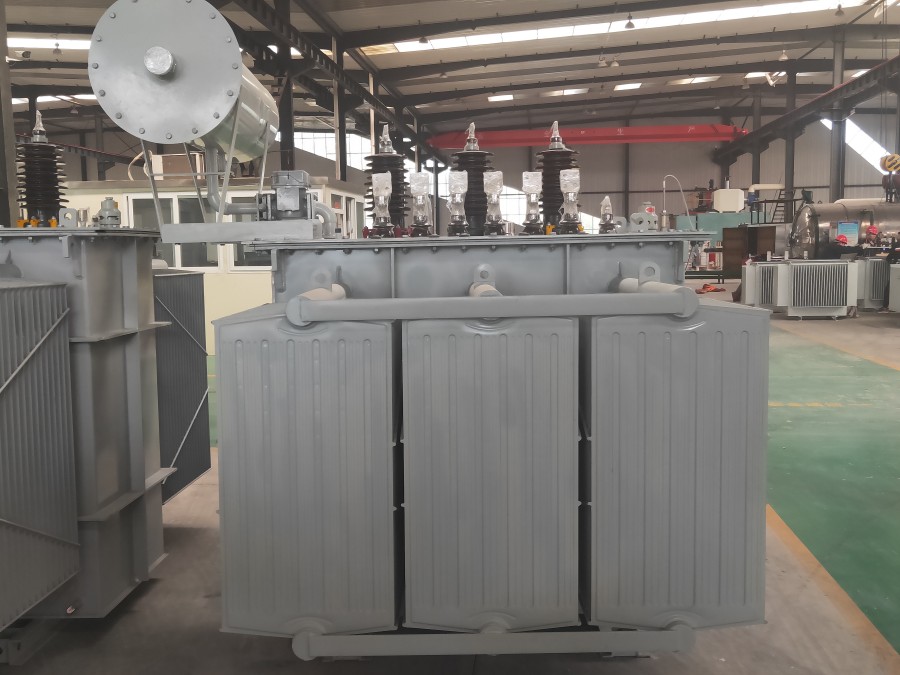
For most procurement teams, the real question is not what the product is, but which configuration delivers the lowest total cost of ownership without compromising safety, loss performance or service life. A clear understanding of the basics makes that decision far easier.
Oil is not a consumable that can be ignored. Dielectric strength, moisture content, acidity and dissolved gas levels all indicate the internal condition of the unit. Moisture reduces breakdown voltage and accelerates insulation aging; overheating generates dissolved gases that can be detected long before a failure. Buyers should therefore insist on an oil test certificate at delivery and plan periodic sampling during service. A well-maintained oil cooled transformer can operate for decades, while a unit with contaminated or under-filled oil may fail within a few years.
Cooling class directly influences how much power a given tank size can deliver. ONAN (oil natural, air natural) relies on convection alone and suits the majority of distribution duties. ONAF adds fans to the radiators and increases capacity, while OFAF or OFWF uses forced oil circulation with forced air or water cooling for heavy industrial loads. Rated output is always tied to defined ambient temperature, altitude and temperature-rise limits, so a unit quoted for one set of site conditions may not be valid for another. When comparing offers, state the ambient temperature, altitude and load profile clearly and ask each supplier to confirm the applicable rating.
Overpaying rarely happens because a single quotation is too high; it usually happens because the specification is wrong. Oversizing raises no-load loss and purchase cost for years, while undersizing leads to overheating and premature failure. Use the following checklist before sending an inquiry:
Comparing lifecycle cost, not just the purchase price, often reveals that a higher-efficiency S13 or S22 unit pays back the price difference in a few years of energy savings.
The biggest hidden costs in this market come from unclear specifications and unverified documentation. Some offers are quoted through multiple intermediaries, some loss figures are declared rather than tested, and some units are refurbished machines presented as new. A reliable purchase includes a nameplate that matches the contract, a routine test report for that serial number, an oil test certificate, an instruction manual and a clear warranty.
Working directly with a manufacturer removes the intermediary margin and shortens the communication chain when custom requirements appear. Runsheng Transformer Co., Ltd. produces S11, S13, S20 and S22 oil-immersed transformers alongside SCB10, SCB13, SCB14 and SCB18 dry-type units, SH15 amorphous alloy transformers, mining and rectifier transformers, and 35 kV preassembled substations. Units are supplied with manuals, inspection reports, test certificates and lifelong quality tracking, supported by factory-direct pricing and available inventory.
A sound oil cooled transformer purchase is built on an accurate load calculation, verified test data and a supplier who answers technical questions directly. Clarify the specification first, then compare price and efficiency on the same basis — that is the simplest way to secure a reliable unit at a fair factory-direct cost.
Contact: phone +86 13406394988 | e-mail runsheng@7813transformer.com | WhatsApp 008613508930968

Runsheng Transformer Co., Ltd. is a professional manufacturer of power transformers, specializing in oil-immersed transformers (S20, S11, S13), SH15 amorphous alloy transformers, S13 series 10KV 3D magnetic path wound-core transformers, D10 single-phase wound-core transformers, as well as mining transformers, rectifier transformers, surge arrestor transformers, load-tap-changing transformers, and custom-engineered special transformers.
WhatsApp & Wechat

No. 6, Intersection of Mount Huangshan Road and Changjiang Road, Liaocheng High tech Industrial Development Zone, Shandong, China


