
When you have coordination challenges, turn to Runsheng Transformer for help
It's all about making things easy, building partnerships, and providing a point of contact.
A transformer that rejects heat to the surrounding air, rather than to water, a chiller loop or a dedicated heat exchanger, is broadly described as an air cooled transformer. In practice the term covers two product families: dry-type units, where air moves directly across cast-resin or resin-impregnated windings, and oil-immersed units, where insulating oil carries heat from the windings to the tank and radiator surfaces before air removes it. Both are specified in the same way — voltage class, rated capacity, cooling class, loss figures and temperature rise — so understanding those five items is the fastest route to a correct and cost-effective purchase.
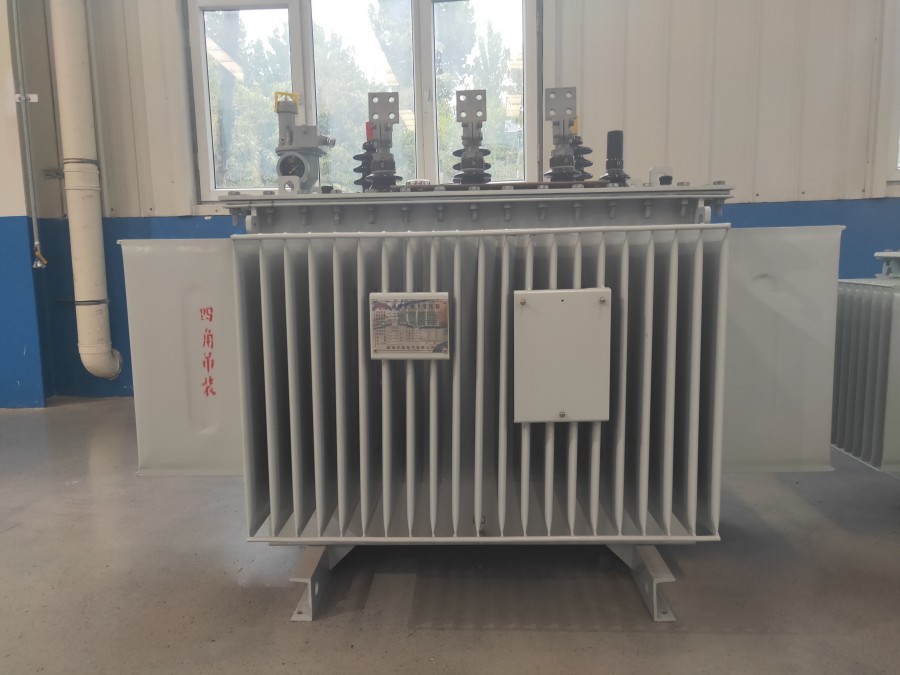
The cooling medium is atmospheric air, and there is no water circuit, no pump and no cooling tower to maintain. That single design decision produces the practical characteristics buyers care about: simple maintenance, no risk of liquid leakage into the environment, and dependable operation in locations where a water supply is unavailable or unreliable. The main commercial variants are:
Dry-type nameplates usually show AN (natural air circulation) or AF (forced air circulation with fans), while oil-immersed units show ONAN or ONAF. The distinction matters commercially, because the Fan-assisted rating is not a free upgrade. It typically represents 125 to 150 percent of the natural rating, but only while the fans are running and the auxiliary supply is available. Sizing a continuous load on the AF figure means the transformer is effectively overloaded whenever a fan fails or the auxiliary circuit is isolated for maintenance. Design the base load on the AN or ONAN rating and treat the higher figure as short-term headroom.
Temperature rise is the second half of the same story. Cast-resin dry-type units are commonly built with class F insulation at 100 K rise, with class H and 125 K rise available where ambient conditions demand it. Oil-immersed units are normally specified at 60 K top-oil rise and 65 K winding rise. Confirm the values printed on the nameplate rather than assuming them, because they directly affect service life and warranty position.
Dry-type air cooled transformers dominate indoor distribution in commercial towers, shopping centres, hospitals, airports, data centres and metro systems, where fire load and liquid containment are unacceptable. Oil-immersed air cooled units serve utility distribution networks, industrial plants, mining sites and renewable energy projects, including wind and solar step-up duty where wide ambient swings are normal. Compact substations and preassembled substations combine either type with high and low voltage switchgear into a single factory-tested package, which shortens site work considerably.
Manufacturers such as Runsheng Transformer Co., Ltd. supply S11, S13, S20 and S22 oil-immersed units alongside SCB10, SCB13, SCB14 and SCB18 dry-type transformers, and ship each unit with a manual, inspection report, test certificate and lifelong quality tracking — which shortens the acceptance stage considerably, particularly for buyers ordering from overseas.
An air cooled transformer is a simple product made complicated by loose specifications. Fix the capacity, voltage ratio, cooling class, loss tier and temperature rise in writing, ask for the type test evidence behind those numbers, and compare suppliers on total owning cost rather than invoice price. Buyers who follow that sequence usually find that factory-direct supply from an established transformer manufacturer delivers both the lower price and the shorter, more predictable lead time.
For technical selection support, drawings or a quotation on distribution transformers, dry-type transformers or compact substations, contact Runsheng Transformer Co., Ltd. at +86 13406394988, e-mail runsheng@7813transformer.com, or WhatsApp 008613508930968.

Runsheng Transformer Co., Ltd. is a professional manufacturer of power transformers, specializing in oil-immersed transformers (S20, S11, S13), SH15 amorphous alloy transformers, S13 series 10KV 3D magnetic path wound-core transformers, D10 single-phase wound-core transformers, as well as mining transformers, rectifier transformers, surge arrestor transformers, load-tap-changing transformers, and custom-engineered special transformers.
WhatsApp & Wechat

No. 6, Intersection of Mount Huangshan Road and Changjiang Road, Liaocheng High tech Industrial Development Zone, Shandong, China


