
When you have coordination challenges, turn to Runsheng Transformer for help
It's all about making things easy, building partnerships, and providing a point of contact.
A dry type transformer is a static electrical device that changes voltage levels without using liquid insulation or oil-based cooling. Instead of being submerged in mineral oil, the core and windings are cooled by air circulation, while insulation is provided by cast epoxy resin, vacuum pressure impregnated (VPI) materials, or high-grade insulating paper systems. With no oil tank, conservator, or combustible liquid, a dry type transformer is the default choice for indoor rooms, high-rise buildings, hospitals, data centres, metro and tunnel projects, and any site where fire load, leakage risk, or maintenance access is a real constraint.
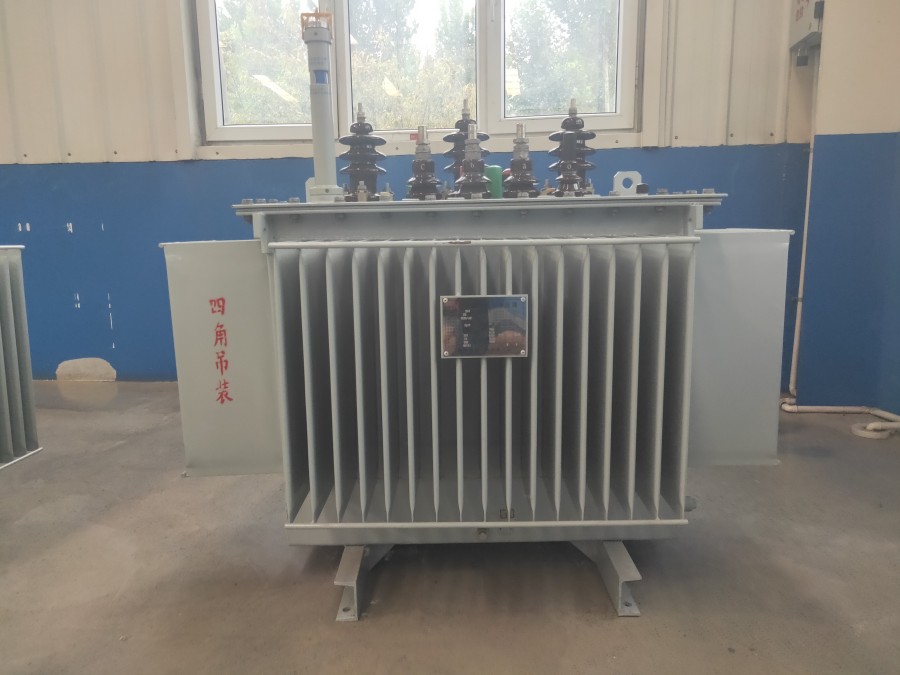
For procurement teams the appeal is practical: a smaller footprint, no oil bunding or catch pit, simpler fire approval, and lighter long-term maintenance. The trade-off is a higher purchase price per kVA than an equivalent oil-immersed unit, plus greater sensitivity to ambient temperature and ventilation. Understanding that trade-off is what separates a low bid from a low total cost of ownership.
The working principle is the same as any transformer: an alternating current in the primary winding creates a magnetic flux in the laminated or wound core, which induces a voltage in the secondary winding according to the turns ratio. What differs is heat removal. Losses from the core (no-load loss) and windings (load loss) are carried away by natural air convection (AN) or, in higher-capacity units, by forced-air fans (AF) that can raise the output rating by roughly 20 to 40 percent. Because air is a weaker cooling medium than oil, dry type designs use larger conductor sections, higher insulation classes such as F or H, and precisely controlled resin casting to keep winding temperature rise within limits.
Model designations matter in evaluation, because they encode efficiency level and design generation rather than price alone.
Higher efficiency grades cost more up front but reduce no-load loss around the clock, which is why the payback calculation should be run over ten to twenty years, not on the quotation total.
Two cost curves run in opposite directions during procurement. The initial price rises as efficiency improves, while running costs fall. A quick evaluation method is to capitalise losses: multiply the no-load loss in kW by the annual hours of energisation and the local tariff, then do the same for load loss using an assumed load factor. For a 1000 kVA unit running continuously, the difference between two efficiency grades can add up to a meaningful annual saving, which often justifies the higher specification within a few years.
A dry type transformer needs an air path. The room should have adequate inlet and outlet openings, with cool air entering low and hot air leaving high, and clearances maintained around the enclosure for convection and inspection. Inadequate ventilation forces the transformer to run hotter, accelerates insulation ageing, and can derate the unit below its nameplate capacity. Protection coordination matters too: because dry type windings are exposed to dust and moisture at the surface, periodic cleaning and infrared scanning of terminations are the two maintenance tasks that deliver the most value.
As a power transformer manufacturer with a comprehensive inventory, Runsheng Transformer Co., Ltd. supplies SCB10, SCB13, SCB14, SCB18, and SGB10 dry type transformers alongside oil-immersed and amorphous alloy units, delivering each order with manuals, inspection reports, and test certificates. For buyers who want a specification reviewed before issuing a purchase order, that kind of factory-direct conversation usually costs nothing and prevents the expensive mistake of underspecifying a unit that must run for twenty years.
Phone: +86 13406394988 | Email: runsheng@7813transformer.com | WhatsApp: 008613508930968

Runsheng Transformer Co., Ltd. is a professional manufacturer of power transformers, specializing in oil-immersed transformers (S20, S11, S13), SH15 amorphous alloy transformers, S13 series 10KV 3D magnetic path wound-core transformers, D10 single-phase wound-core transformers, as well as mining transformers, rectifier transformers, surge arrestor transformers, load-tap-changing transformers, and custom-engineered special transformers.
WhatsApp & Wechat

No. 6, Intersection of Mount Huangshan Road and Changjiang Road, Liaocheng High tech Industrial Development Zone, Shandong, China


