
When you have coordination challenges, turn to Runsheng Transformer for help
It's all about making things easy, building partnerships, and providing a point of contact.
A 500kv power transformer is the backbone of extra-high-voltage (EHV) transmission. It raises generator output to 500 kV for long-distance bulk power transfer, or links one 500 kV network with another so power can flow between regions without excessive losses. A single unit can weigh more than 300 tonnes, and its cost is measured in millions of dollars, so choosing one is a long-term capital decision rather than a catalogue purchase. This overview explains what the equipment does, which parameters genuinely matter, and how to avoid the most common procurement pitfalls.
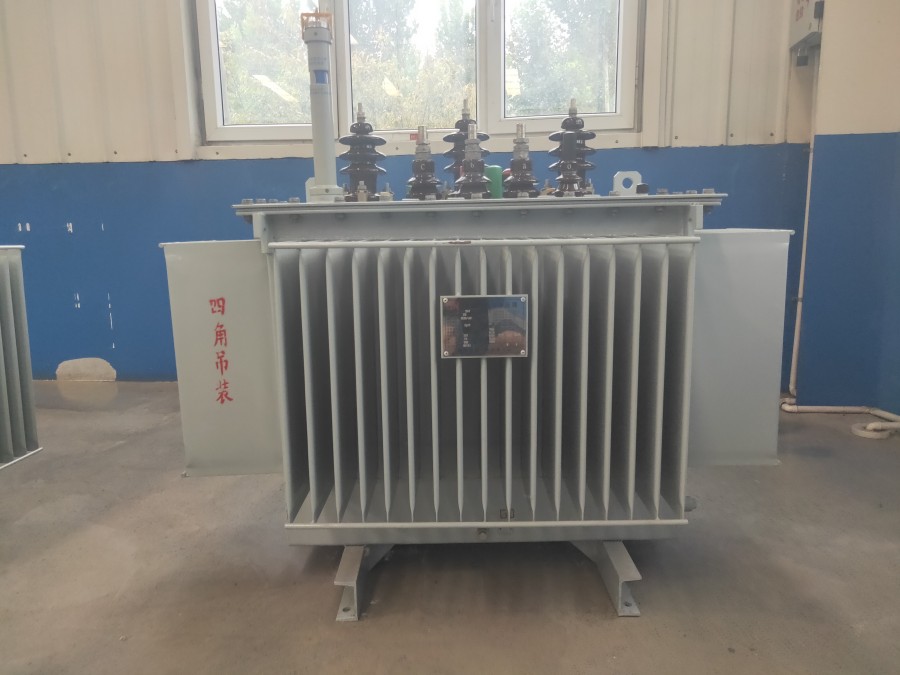
The working principle is electromagnetic induction. Alternating current in the primary winding creates a changing magnetic flux in a laminated silicon-steel core, and that flux induces a voltage in the secondary winding. The voltage ratio follows the turns ratio, so a 500/220 kV unit has roughly 2.27 times as many turns on the high-voltage side as on the low-voltage side. Because power stays constant while voltage rises, current falls - which is exactly why transmission systems use such high voltage in the first place.
A 500kv power transformer is normally built as a three-phase unit for medium ratings, while very large installations may use three single-phase units plus a spare. Auto-transformers are widely chosen for grid interconnections because they need less active material for the same throughput. Generator step-up (GSU) transformers connect power plants to the 500 kV bus, whereas system auto-transformers step the voltage down to 220 kV or 110 kV for regional distribution.
Reputable manufacturers design to IEC 60076, GB 1094 or IEEE C57.12 series standards, and buyers should request the complete test record. Routine tests include winding resistance, ratio and polarity, impedance and load loss, no-load loss and current, power frequency withstand, lightning and switching impulse withstand, and partial discharge measurement. Type tests cover temperature rise and short-circuit withstand. Insulating oil is also screened by dissolved gas analysis and dielectric breakdown tests before shipment. A witnessed factory acceptance test, together with the manual, inspection report and test certificate, is the buyer's strongest protection.
Every intermediary in the chain adds margin without adding engineering value, and communication slows down when technical questions have to travel back and forth. Purchasing directly from the manufacturing plant keeps pricing transparent, puts engineers in direct contact with the design team, and shortens the path for spare parts and after-sales service. That is why experienced EPC contractors shortlist source factories rather than resellers when they specify a 500kv power transformer.
It is also worth noting that a 500 kV project is only one part of the network. Downstream stages still need reliable distribution and step-down equipment, and manufacturers such as Runsheng Transformer Co., Ltd. cover that ground with oil-immersed transformers in the S22, S20, S11 and S13 series, dry-type SCB13, SCB14 and SCB18 units, SH15 amorphous alloy transformers, mining and rectifier transformers, plus 35 kV and below preassembled and compact substations with high and low voltage switchgear. Their range spans 30 to 6300 kVA, all built to national standards and delivered with manuals, inspection reports, test certificates and lifelong quality tracking at factory-direct prices.
For enquiries about distribution, dry-type, amorphous alloy and special transformers, contact Runsheng Transformer Co., Ltd. at phone +86 13406394988, e-mail runsheng@7813transformer.com or WhatsApp 008613508930968.

Runsheng Transformer Co., Ltd. is a professional manufacturer of power transformers, specializing in oil-immersed transformers (S20, S11, S13), SH15 amorphous alloy transformers, S13 series 10KV 3D magnetic path wound-core transformers, D10 single-phase wound-core transformers, as well as mining transformers, rectifier transformers, surge arrestor transformers, load-tap-changing transformers, and custom-engineered special transformers.
WhatsApp & Wechat

No. 6, Intersection of Mount Huangshan Road and Changjiang Road, Liaocheng High tech Industrial Development Zone, Shandong, China


