
When you have coordination challenges, turn to Runsheng Transformer for help
It's all about making things easy, building partnerships, and providing a point of contact.
A 220kv power transformer is a high-voltage power transformer built to operate on 220 kV transmission networks. Its job is simple to describe and demanding to engineer: step generator-level voltage (usually 10 kV to 20 kV) up to 220 kV so electricity can travel hundreds of kilometres with acceptable losses, or step 220 kV down to 110 kV, 35 kV or 10 kV for sub-transmission and distribution. In grid terms, it is the workhorse that links the generating side of the system with the transmission backbone.
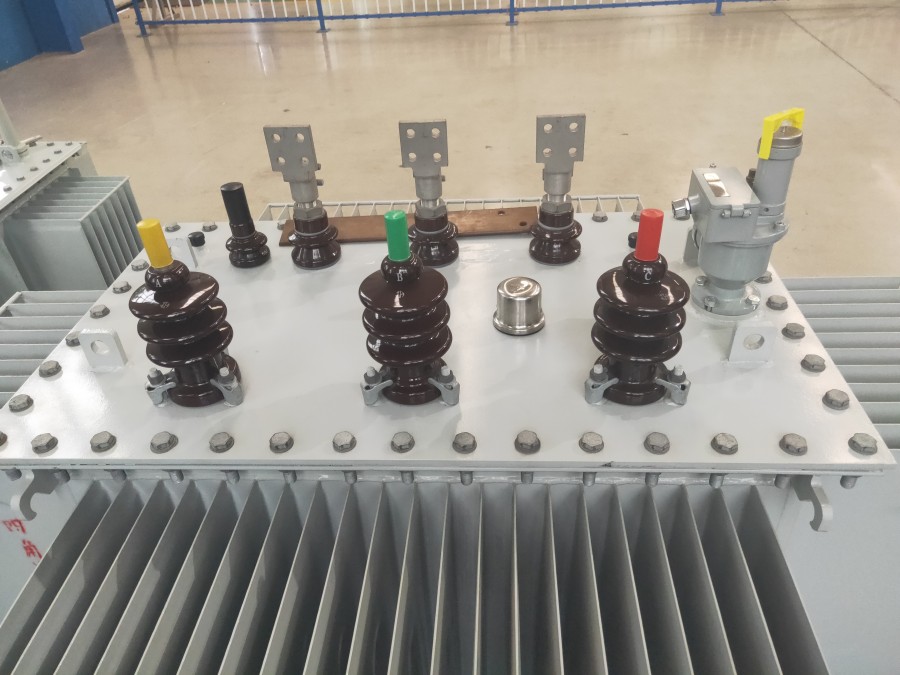
It is worth drawing a clear line between this class of equipment and ordinary distribution units. A distribution transformer typically covers 30–6300 kVA and is rated 35 kV and below. A 220kv power transformer normally starts around 120 MVA and commonly appears in 150 MVA, 180 MVA and 240 MVA ratings, with three-phase oil-immersed construction, forced cooling and on-load tap changing. Those differences drive everything about how it is designed, tested, transported and priced.
Although external appearances vary, the internal architecture follows a consistent logic. Understanding it makes specification and inspection far easier for procurement teams.
Specification errors are the most expensive mistakes in high-voltage procurement, because they surface after manufacture rather than before. The following data should be locked down in the technical agreement:
This is a common point of confusion. Dry-type transformers, including SCB10, SCB13, SCB14 and SCB18 designs, are excellent for indoor distribution duty at medium voltage, but the 220 kV class is dominated by oil-immersed construction because oil provides far superior dielectric strength and cooling capacity at high voltage. A small number of special gas-insulated or dry-type solutions exist for niche applications, yet the mainstream choice for a 220kv power transformer remains an oil-immersed, oil-cooled design.
Reputable manufacturers build and test to internationally recognised standards such as IEC 60076 and GB 1094, with GB/T 6451 covering technical parameters for three-phase oil-immersed power transformers. A complete test package should include routine tests on every unit and type tests on the design.
Cost in this segment is dominated by copper and CRGO silicon steel content, OLTC and bushing brands, loss specification, cooling design, factory testing scope, and logistics. Because a single 220kv power transformer can weigh well over 100 tonnes, freight and site assembly planning carry real budget weight.
Buying factory-direct is the most reliable route to a fair price. Working with an established China transformer supplier removes trading layers, and a manufacturer that maintains its own inventory and delivers every unit with manuals, inspection reports, test certificates and lifelong quality tracking gives buyers verifiable assurance rather than promises. Runsheng Transformer Co., Ltd., for example, produces oil-immersed and dry-type transformers, amorphous alloy units, mining and rectifier transformers, plus compact substations and high and low voltage switchgear — and applies the same documentation and quality-tracking discipline that high-voltage buyers expect across its range of 30–6300 kVA equipment. When specifying a 220kv power transformer, insist on the same rigour.
For pricing, technical selection support or a factory-direct quotation, contact Runsheng Transformer Co., Ltd. by phone at +86 13406394988, e-mail runsheng@7813transformer.com, or WhatsApp 008613508930968.

Runsheng Transformer Co., Ltd. is a professional manufacturer of power transformers, specializing in oil-immersed transformers (S20, S11, S13), SH15 amorphous alloy transformers, S13 series 10KV 3D magnetic path wound-core transformers, D10 single-phase wound-core transformers, as well as mining transformers, rectifier transformers, surge arrestor transformers, load-tap-changing transformers, and custom-engineered special transformers.
WhatsApp & Wechat

No. 6, Intersection of Mount Huangshan Road and Changjiang Road, Liaocheng High tech Industrial Development Zone, Shandong, China


