
When you have coordination challenges, turn to Runsheng Transformer for help
It's all about making things easy, building partnerships, and providing a point of contact.
A 750kv power transformer is the core equipment of an extra-high-voltage (EHV) transmission system. It steps voltage up at the generating end or steps it down at a substation so that bulk electricity can travel hundreds of kilometers with acceptable losses. Unlike a distribution transformer working close to the load, a 750kv power transformer operates at the top of the transmission hierarchy, where dielectric stress, short-circuit forces and thermal duty are far more demanding.
In practice, units at this voltage class appear in three main roles:
Because the equipment is large, heavy and mission-critical, buying a 750kv power transformer is a capital project, not a simple purchase. Understanding the basics before you request quotations is the fastest way to avoid overpaying or inheriting a problem unit.
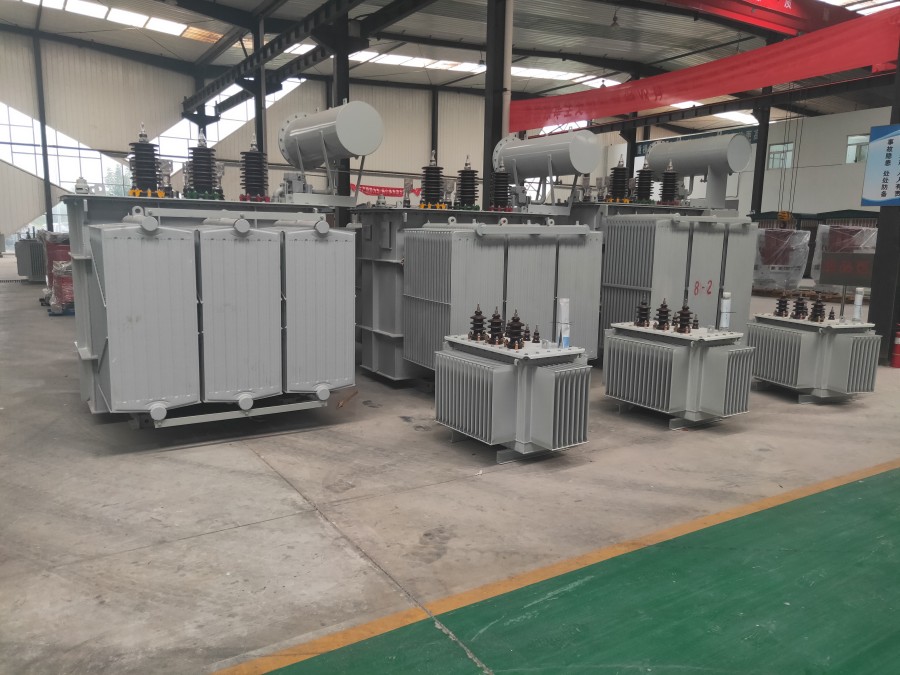
Most units in this class are oil-immersed, liquid-cooled designs. The main construction elements are consistent across reputable manufacturers:
Very large EHV units are frequently built as three single-phase transformers connected into a bank, which simplifies transport and provides spare-phase capability. A three-phase design is possible where transport routes allow, and the choice affects cost, site work and redundancy.
Transmitting the same power at a higher voltage reduces current, and lower current means lower I squared R losses in the line, smaller conductor cross-sections and fewer parallel circuits. That is why a 750kv power transformer is chosen for long-distance, high-capacity corridors linking remote hydro, wind and solar bases to load centres.
The trade-off is concentrated technical risk: insulation distances, bushing performance and stray losses all become critical, and the price per MVA is higher than at lower voltage levels. Buyers therefore need to balance the purchase price against lifetime energy losses, which over a 30-year service life can exceed the initial cost several times.
Reputable manufacturers design and test EHV units to internationally recognised standards such as IEC 60076 and the corresponding national standard GB 1094. Typical verification includes routine tests (ratio, winding resistance, impedance, no-load and load loss, dielectric tests), type tests (lightning impulse, temperature rise, short-circuit withstand) and special tests such as partial discharge and noise measurement.
A factory acceptance test with the buyer's witness present is one of the strongest protections available. Insist on the complete package: complete test reports, inspection certificates, outline drawings, oil test data, tap changer records and a manual. Suppliers that hesitate to provide these documents are a warning sign, not a bargain.
Start with product range and process control, not price alone. A manufacturer that builds oil-immersed, dry-type and amorphous alloy transformers across a wide capacity range usually has mature design tools, in-house testing and a stable supply chain. Runsheng Transformer Co., Ltd. follows this model, supplying S11, S13, S20 and S22 oil-immersed transformers, SCB10, SCB13, SCB14 and SCB18 dry-type transformers, SH15 amorphous alloy units, mining and rectifier transformers, plus 35 kV and below preassembled substations, compact substations and high and low voltage switchgear, all shipped with manuals, inspection reports and test certificates under a lifelong quality tracking programme.
When you evaluate suppliers for a high-voltage project, ask for the same proof you would expect from any capital equipment vendor: reference lists, design calculations, test capability, factory audit results, delivery schedule and after-sales response time. Factory-direct sourcing from an established China transformer supplier removes distributor markups and usually shortens the communication chain between the design engineer and the production floor.
A 750kv power transformer is rarely a plug-and-play item. Site assembly, oil processing, vacuum drying and commissioning must be planned with the manufacturer. Long-term cost is driven by load and no-load losses, cooling maintenance, oil testing intervals, online monitoring and access to spare parts. Choosing a supplier that supports the unit from design through commissioning and lifelong service is usually cheaper than saving a few percent on the initial invoice.
For buyers comparing options, the winning strategy is simple: define the technical specification precisely, demand guaranteed losses and verified documents, and buy from a manufacturer that engineers, tests and stands behind the product. Contact Runsheng Transformer Co., Ltd. for transformer solutions and factory-direct pricing: phone +86 13406394988, e-mail runsheng@7813transformer.com, WhatsApp 008613508930968.

Runsheng Transformer Co., Ltd. is a professional manufacturer of power transformers, specializing in oil-immersed transformers (S20, S11, S13), SH15 amorphous alloy transformers, S13 series 10KV 3D magnetic path wound-core transformers, D10 single-phase wound-core transformers, as well as mining transformers, rectifier transformers, surge arrestor transformers, load-tap-changing transformers, and custom-engineered special transformers.
WhatsApp & Wechat

No. 6, Intersection of Mount Huangshan Road and Changjiang Road, Liaocheng High tech Industrial Development Zone, Shandong, China


