
When you have coordination challenges, turn to Runsheng Transformer for help
It's all about making things easy, building partnerships, and providing a point of contact.
A 500kv power transformer is a high-voltage power transformer designed for a 500 kV system, the extra-high-voltage backbone of modern transmission grids. Its function is easy to state and hard to engineer: step generator output, usually 20 kV to 24 kV, up to 500 kV for long-distance transmission, then step it back down to 220 kV or 110 kV at regional substations. Units in this class commonly range from about 100 MVA to more than 1,000 MVA, either as a single three-phase unit or as a bank of three single-phase units, and are expected to run continuously for 30 years or more.
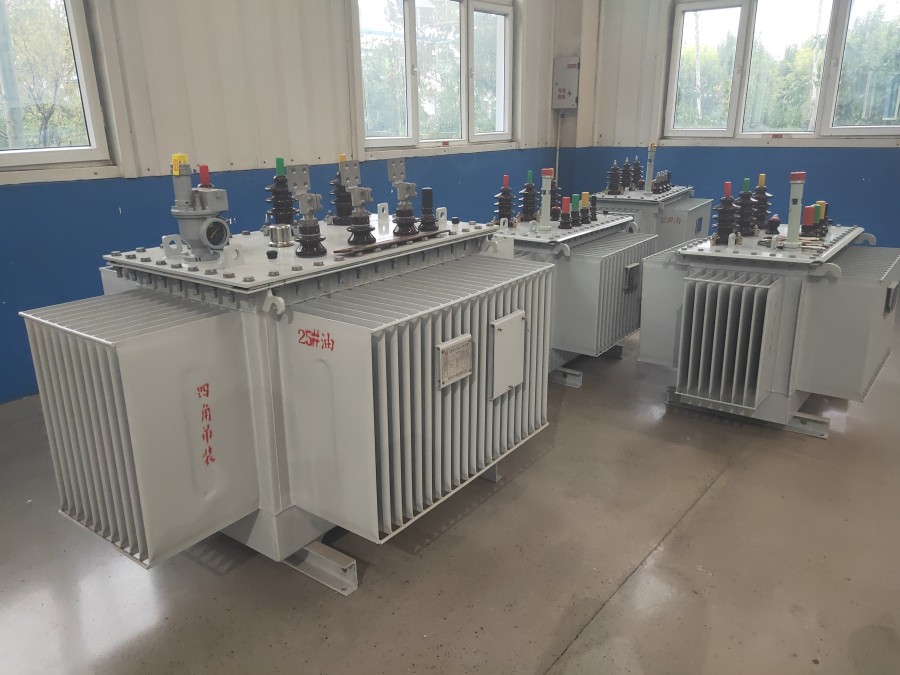
Because a single unit can feed an entire city district, reliability is not a feature here, it is the specification. Every design decision, from core material to cooling class to bushing type, is made to keep losses low, temperature rise controlled, and short-circuit forces contained.
For the same power transfer, raising voltage lowers current. Lower current means smaller conductor cross-sections, lower I2R line losses, and fewer parallel circuits for the same corridor. That is why 500 kV links are typically used for bulk transfers of several hundred to several thousand megawatts over hundreds of kilometers, and why a 500kv power transformer sits at both ends of every such corridor.
Most large installations use one of the following arrangements, selected on transport limits, spare-parts strategy and cost:
Reputable 500kv power transformer suppliers build to IEC 60076, GB 1094 or IEEE C57.12 series standards, and they should be able to show a complete test record. Routine tests normally cover winding resistance, ratio and vector group, no-load loss and current, load loss and impedance, insulation resistance, power-frequency dielectric tests, and oil tests. Type and special tests include lightning impulse, switching impulse, temperature rise, and short-circuit withstand. Independent third-party witnessing and a full set of test certificates, manuals and inspection reports are essential documents, not optional extras.
Price is only the beginning. A 500kv power transformer is a 30-year asset whose real cost includes losses, transport, foundation work, spare parts and outage risk. Experienced buyers work through a short checklist before signing:
It is also worth remembering that not every project needs 500 kV. Many industrial, mining and renewable energy projects are far better served by equipment in the 35 kV and below range, such as S22, S20, S13 and S11 oil-immersed transformers, SCB13, SCB14 and SCB18 dry-type transformers, SH15 amorphous alloy transformers, and compact substations. Manufacturers such as Runsheng Transformer Co., Ltd. focus on exactly this segment, offering factory-direct pricing, a comprehensive inventory, national-standard compliance, and complete manuals, inspection reports and test certificates with lifelong quality tracking.
A 500kv power transformer is the workhorse of EHV transmission: high capacity, low loss, heavily tested and built for decades of service. Buying one well means buying verified engineering, verified testing and verified documentation from a manufacturer you can audit, not simply the lowest bid. For 500 kV class projects, compare full technical offers rather than headline prices, and for distribution or 35 kV applications, source directly from the factory to remove middleman markups and secure full after-sales support.
Contact us for a technical consultation or a factory-direct quotation: phone +86 13406394988, e-mail runsheng@7813transformer.com, WhatsApp 008613508930968.

Runsheng Transformer Co., Ltd. is a professional manufacturer of power transformers, specializing in oil-immersed transformers (S20, S11, S13), SH15 amorphous alloy transformers, S13 series 10KV 3D magnetic path wound-core transformers, D10 single-phase wound-core transformers, as well as mining transformers, rectifier transformers, surge arrestor transformers, load-tap-changing transformers, and custom-engineered special transformers.
WhatsApp & Wechat

No. 6, Intersection of Mount Huangshan Road and Changjiang Road, Liaocheng High tech Industrial Development Zone, Shandong, China


