
When you have coordination challenges, turn to Runsheng Transformer for help
It's all about making things easy, building partnerships, and providing a point of contact.
An air cooled transformer is a transformer whose heat is dissipated directly to the surrounding air instead of being carried away by insulating oil. In practice, this almost always means a dry-type transformer: the windings are cast in epoxy resin or impregnated with class F/H insulation, and cooling air circulates across the coil surfaces and the core. Because there is no oil tank, no conservator and no oil leakage risk, the air cooled transformer has become the default choice for indoor substations, commercial buildings, hospitals, data centres, metro stations and other places where fire safety and maintenance access are tight.
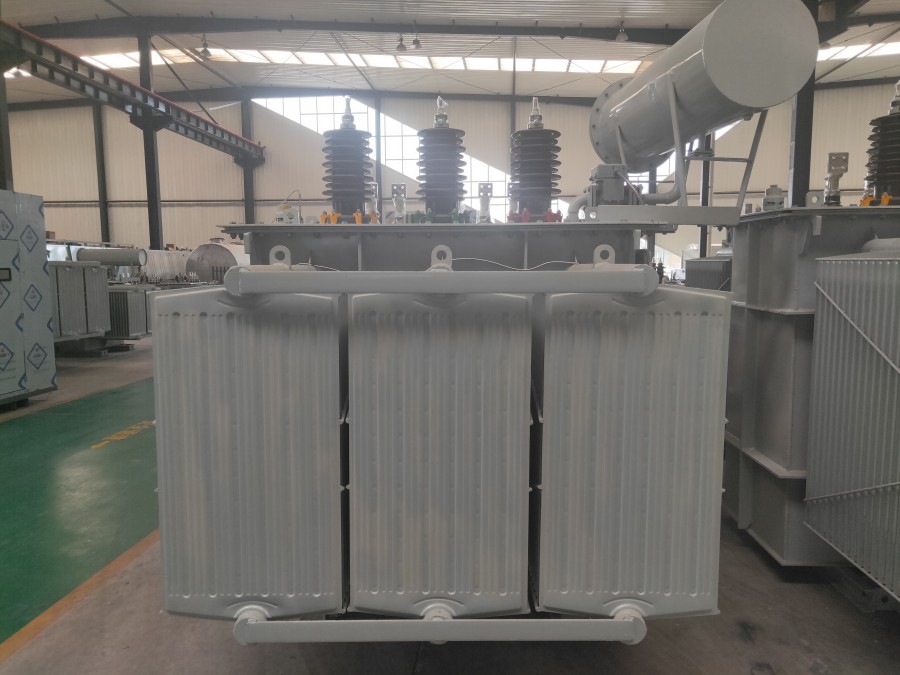
Typical air cooled transformer products include the SCB10, SCB13, SCB14 and SCB18 cast-resin series and the SGB10 open-wound series, generally covering 30 kVA to 6300 kVA at 35 kV and below. Higher energy-efficiency grades, such as SCB14 and SCB18, reduce no-load loss significantly and are increasingly required by project tenders that evaluate total cost of ownership rather than purchase price alone.
Air cooling is not a single behaviour; it is a rated cooling class. Understanding the class prevents one of the most common procurement misunderstandings — buying a unit and then discovering it cannot carry the load in a hot plant room.
Oil-immersed units (S11, S13, S20, S22) still win on price per kVA, overload capability and outdoor robustness. The air cooled transformer wins on safety and siting flexibility. A quick comparison:
Typical duty includes commercial and residential building substations, hospitals and laboratories, water treatment plants, ports and tunnels, photovoltaic and wind booster stations, and industrial plants where oil is prohibited or undesirable. In renewable energy projects, an air cooled transformer is often specified for compact indoor collector substations, while oil-immersed units handle outdoor step-up duty.
Buying directly from a manufacturer rather than through layers of trading agents removes mark-up and shortens the technical feedback loop. Runsheng Transformer Co., Ltd. manufactures SCB13, SCB14 and SCB18 dry-type transformers alongside S11, S13, S20 and S22 oil-immersed units, amorphous alloy types and preassembled substations, and supplies each unit with a manual, inspection report, test certificate and lifelong quality tracking. Sharing your load profile and site conditions early lets the factory propose the smallest unit that meets the requirement, which is where the real saving sits.
An air cooled transformer needs ventilation, not just space. Plan for adequate inlet and outlet openings, keep at least the manufacturer's clearance on all sides, and avoid recirculating hot air. Keep the coil surfaces clean; dust on cast resin acts as a thermal blanket and raises winding temperature. Check fan operation and thermostat settings annually if AF cooling is used, and record winding temperatures during the first weeks of operation as a baseline for later comparison.
The air cooled transformer is a safety-driven, low-maintenance solution whose real cost is decided at the specification stage, not at the quotation stage. Get the cooling class, losses, impedance, conductor section and site conditions right, and the unit will run quietly for decades. For technical selection support or a factory-direct quotation, contact Runsheng Transformer Co., Ltd. at phone +86 13406394988, email runsheng@7813transformer.com, or WhatsApp 008613508930968.

Runsheng Transformer Co., Ltd. is a professional manufacturer of power transformers, specializing in oil-immersed transformers (S20, S11, S13), SH15 amorphous alloy transformers, S13 series 10KV 3D magnetic path wound-core transformers, D10 single-phase wound-core transformers, as well as mining transformers, rectifier transformers, surge arrestor transformers, load-tap-changing transformers, and custom-engineered special transformers.
WhatsApp & Wechat

No. 6, Intersection of Mount Huangshan Road and Changjiang Road, Liaocheng High tech Industrial Development Zone, Shandong, China


