
When you have coordination challenges, turn to Runsheng Transformer for help
It's all about making things easy, building partnerships, and providing a point of contact.
An air cooled transformer is a transformer whose heat is dissipated directly to the surrounding air instead of being carried away by insulating oil. In practice, most air cooled units are dry-type transformers: the core and windings are encapsulated in cast resin or impregnated with insulating varnish, and cooling is achieved by natural convection, radiation, and — on larger ratings — forced ventilation from fans. Because there is no oil tank, no conservator, and no oil fire load, the air cooled transformer is the default choice for indoor installations where fire safety, environmental protection, and minimal maintenance matter more than the last few percent of capital cost.
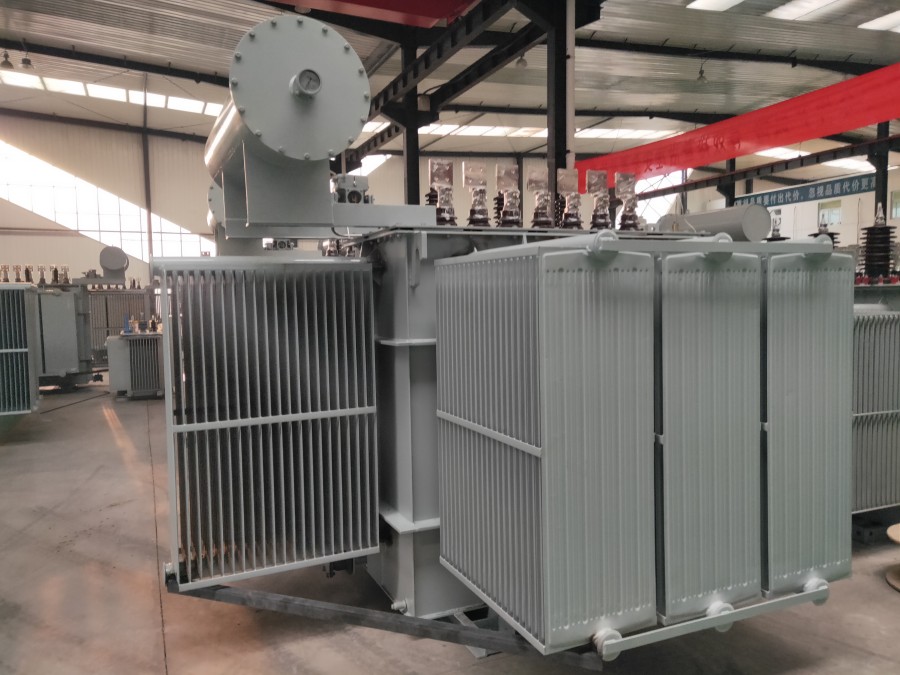
This overview explains how these units work, what the ratings on the nameplate mean, which specifications actually change the price, and how to buy an air cooled transformer without paying for features you do not need.
Cooling class is the single most misunderstood item on a dry-type nameplate. Three designations cover almost every air cooled transformer sold today:
Fans are switched by winding temperature sensors, so the AN/AF air cooled transformer runs quietly at normal load and only brings the fans in during peak periods or high ambient temperatures.
Both technologies are mature and reliable; the choice is usually dictated by location rather than by performance.
When comparing quotations, look beyond the kVA figure. These parameters explain most of the price gap between two seemingly identical offers:
Typical applications include commercial and office buildings, hospitals and laboratories, subway and railway stations, data centres, water treatment plants, shipyards, and process industries. In renewable energy projects, dry-type units are often used on the low-voltage side of wind and solar converters where fire risk must be minimised. Where the environment is wet, salty, or heavily polluted, an oil-immersed or specially protected design is usually preferred.
Price is driven by four variables: rating, winding material, loss level, and enclosure or accessory package. The fastest way to cut cost without cutting quality is to buy directly from the factory that winds the coils, rather than through a trading layer. A manufacturer with in-house casting, winding, and testing can match the temperature rise and loss class to your actual load profile instead of quoting a generic catalogue item.
Runsheng Transformer Co., Ltd. produces SCB13, SCB14 and SCB18 dry-type transformers alongside S11, S13, S20 and S22 oil-immersed units, SH15 amorphous alloy transformers, and 35 kV preassembled substations. Every air cooled transformer is supplied with a manual, inspection report, test certificate, and lifelong quality tracking, and units are shipped at factory-direct prices from maintained stock.
Buying an air cooled transformer is mostly a matter of matching cooling class, loss level, and enclosure to the real site conditions — then buying that specification from the source. Get those three right and the unit will run quietly for decades. Contact us at phone +86 13406394988, e-mail runsheng@7813transformer.com, or WhatsApp 008613508930968 for a specification review and a factory-direct quotation.

Runsheng Transformer Co., Ltd. is a professional manufacturer of power transformers, specializing in oil-immersed transformers (S20, S11, S13), SH15 amorphous alloy transformers, S13 series 10KV 3D magnetic path wound-core transformers, D10 single-phase wound-core transformers, as well as mining transformers, rectifier transformers, surge arrestor transformers, load-tap-changing transformers, and custom-engineered special transformers.
WhatsApp & Wechat

No. 6, Intersection of Mount Huangshan Road and Changjiang Road, Liaocheng High tech Industrial Development Zone, Shandong, China


